
Derek Phillips: Reflections on a pioneer in Independent Lighting Design
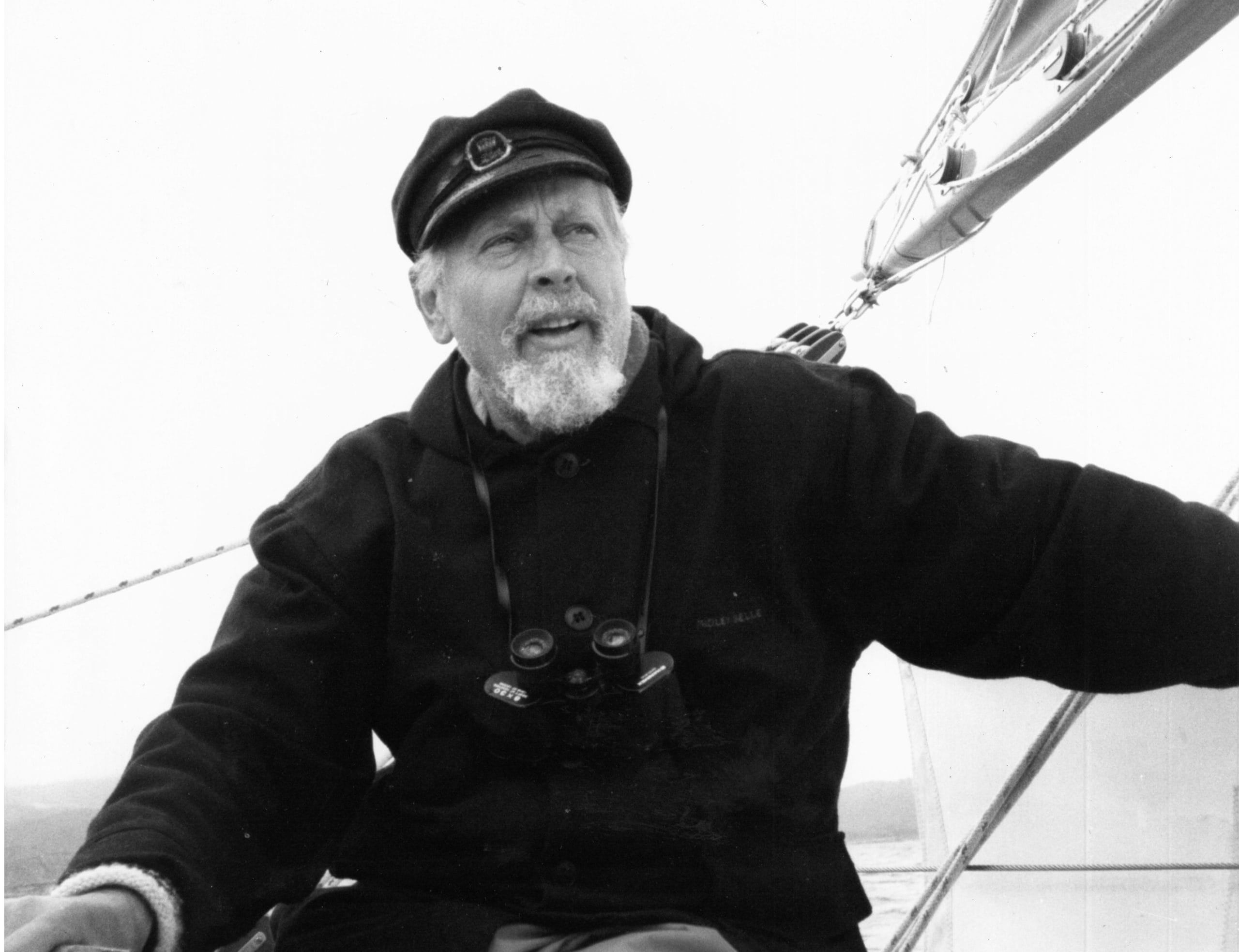
Born in Croydon on 24 February 1923, Derek Phillips spent his earliest years in India, where his father, Reg Phillips, worked for the Imperial Bank of India. At the age of five, he was sent back to England to board at St Dunstan’s Preparatory School in Worthing, before moving on to Haileybury College in Hertfordshire. It was there, spending countless hours in the Art Department, that his lifelong fascination with design began to emerge.
On his nineteenth birthday in February 1942, Derek joined the Royal Navy. He served in the Fleet Air Arm during the Second World War and later became part of the Navy’s first Night Fighting Squadron. During his service he developed a close friendship with Pilot Lieutenant Dennis Thornley, a qualified architect who encouraged him to pursue a career in architecture.
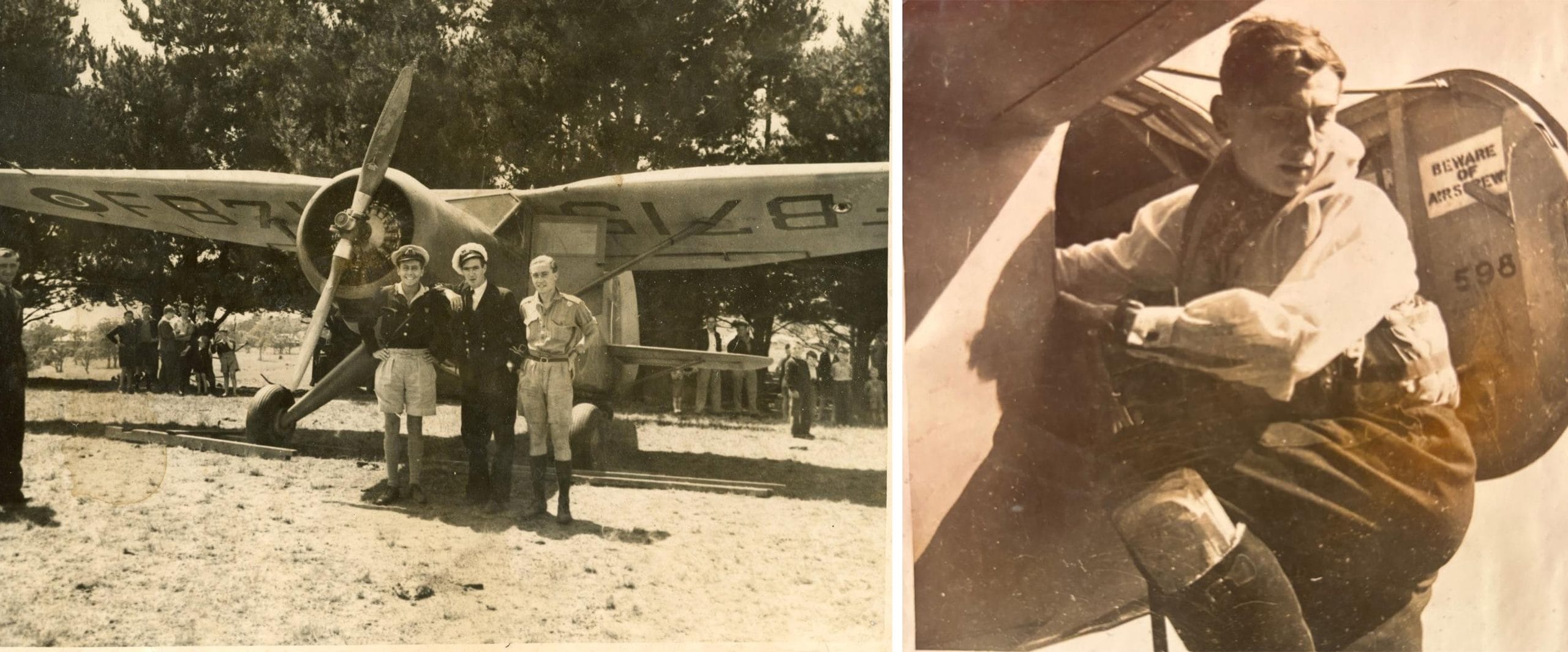
Image 1: Derek with Pilot Lieutenant Dennis Thornley in the Royal Navy: 1942-1945; Image 2: Derek in the Royal Navy: 1942-1945
Derek’s Student Days / Meeting Le Corbusier
Following the war, Derek secured educational release and gained a place at the University of Liverpool to study Architecture, graduating with First Class Honours. It was during these years that he experienced one of the encounters he would recount throughout his life.
Travelling through Europe with fellow students Nick Diamantis and Philip Dod on a research trip, the three stopped in Paris to visit Le Corbusier’s Armée du Salut and the Cité Universitaire. They were fortunate to meet Le Corbusier himself and, amongst subjects, discussed the architect’s project Chapelle Notre-Dame du Haut, Ronchamp, France.
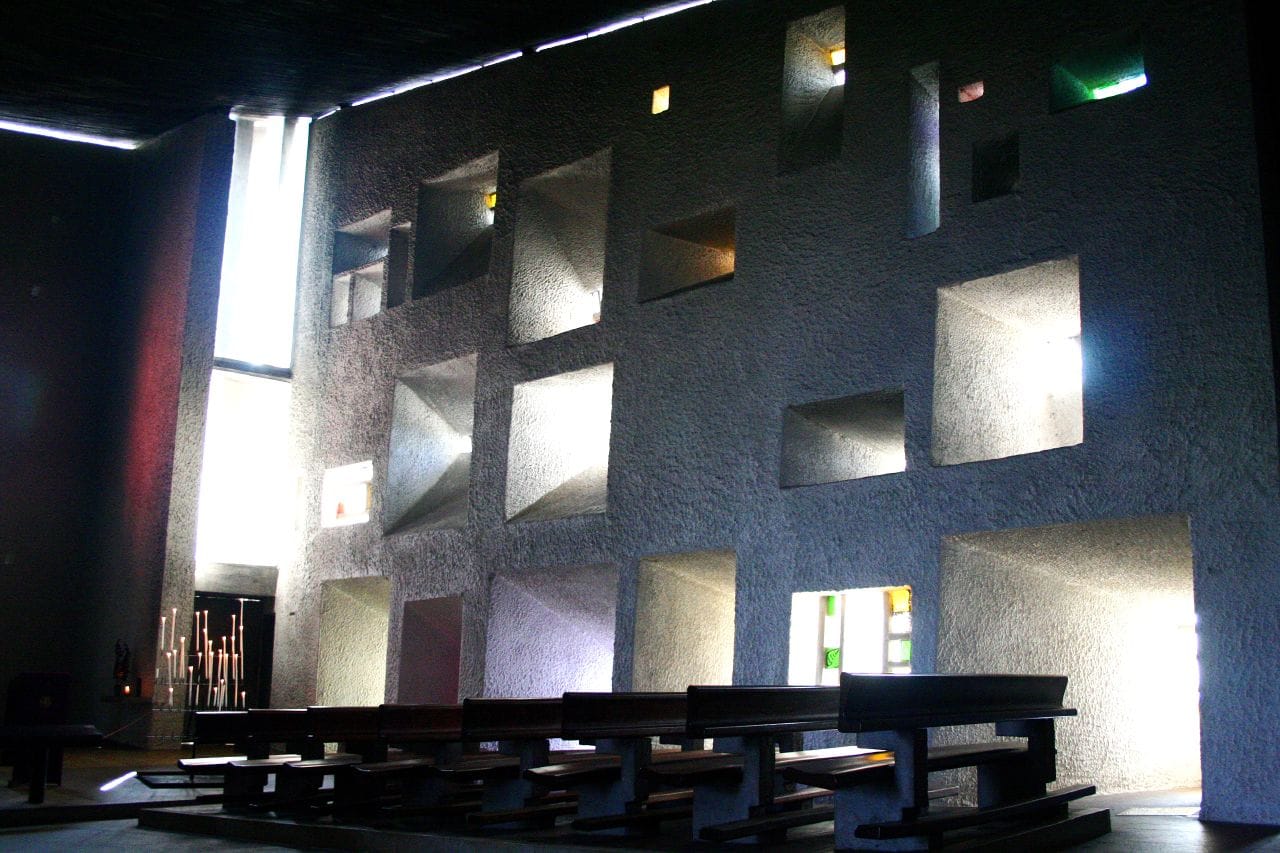

Chapelle Notre-Dame-du-Haut, Ronchamp, France designed by Architect Le Corbusier: Exterior image: John Lord; Interior Image: Elyullo
“We couldn’t believe our luck when, visiting the latter, Nick spotted a chap painting up a ladder and whispered ‘I think that’s Charles-Edouard Jeanneret’ and so it was, – Le Corbusier himself.”
For a young architecture student, stumbling across one of the twentieth century’s most influential architects while he was at work was a moment that left a lasting impression.
At the end of his degree, the Vice-Chancellor encouraged Derek to apply for a Commonwealth Fund Fellowship in America. There were, however, two conditions.
“There were two things I had to do – shave off my beard and, more importantly, write a programme of work to be carried out in America.”

Derek with his wife Diana on honeymoon in 1952 prior to their departure from Southampton to New York
After discussions with Dennis Thornley, Derek proposed a study into the importance of daylight in city planning, which secured him a place at the Massachusetts Institute of Technology (MIT). On arrival, however, he received an unexpected response from Dean Anderson:
“You have come to the wrong place, we don’t know anything about daylight. In America we pull down the blinds and turn on the electric light.”
Rather than resist the change in direction, Derek began research into the use of artificial light in architecture, ultimately forming the basis of his Master’s degree and introducing him to the discipline that would define the his career.
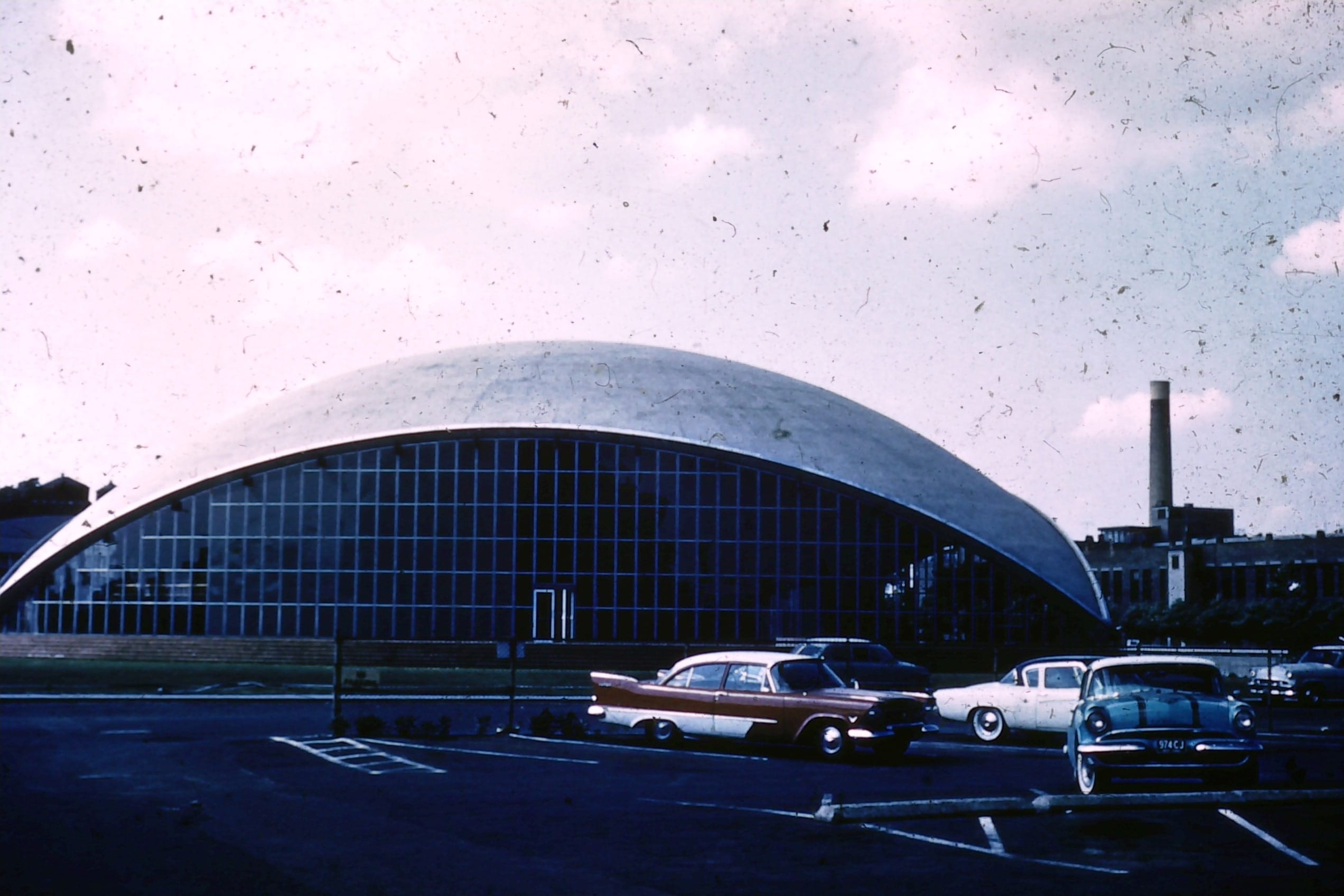
The Massachusetts Institute of Technology (MIT), Cambridge, Massachusetts, USA: 1950s
Frank Lloyd Wright
While travelling in the United States, another extraordinary opportunity presented itself. Having written in advance to Frank Lloyd Wright, Derek was invited to visit Taliesin West, Wright’s winter home and studio in Arizona.
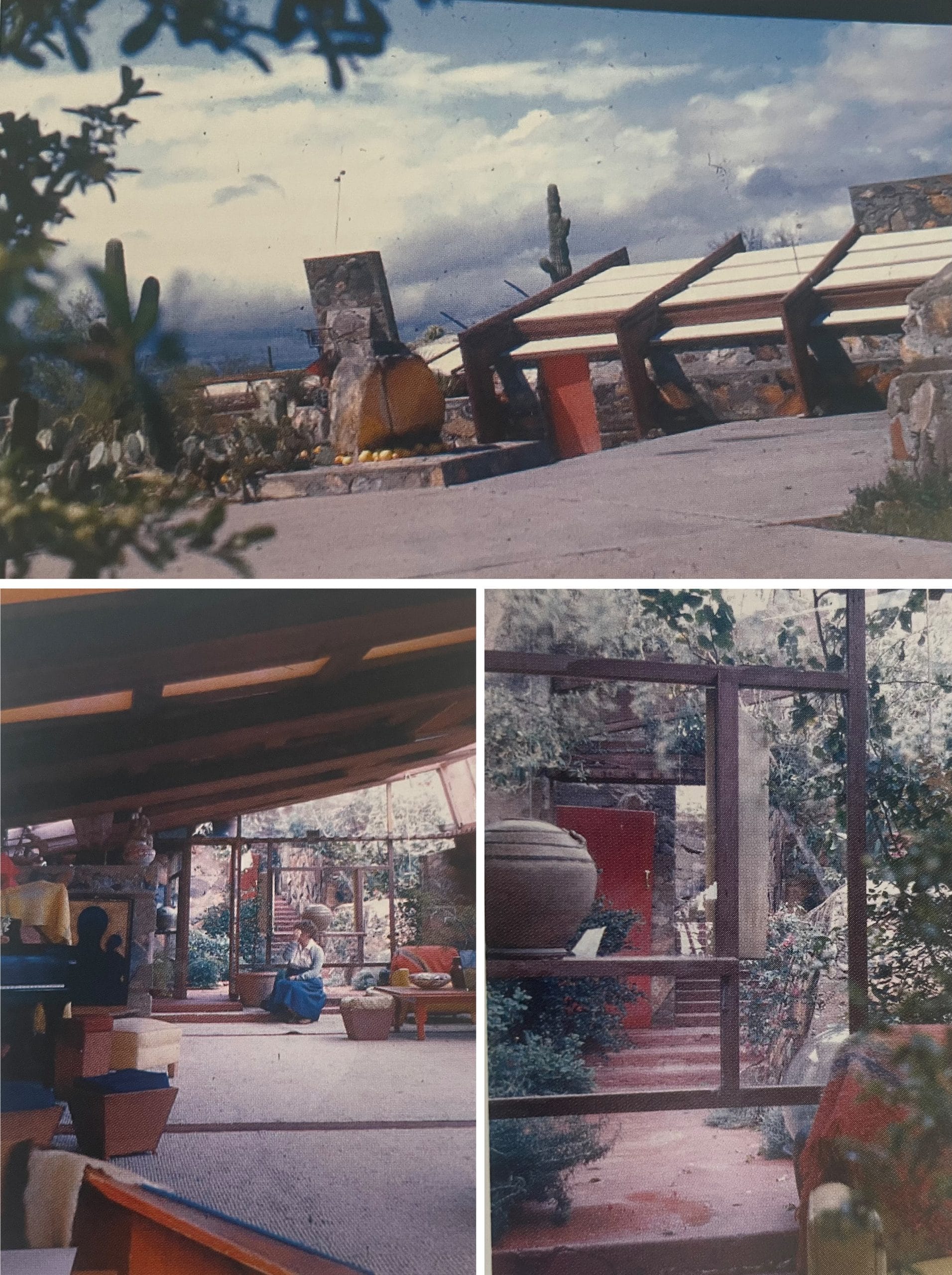
Taliesin West, Wright’s winter home and studio in Arizona, USA: 1950s
The meeting became one of the defining moments of his professional life. During an hour-long conversation about architecture, Wright spoke passionately about his work and his approach to lighting, talking about his invention of concealed lighting. More importantly, the visit crystallised an idea that would guide Derek’s philosophy for decades to come:
“I could see that it was the song not the singer that was paramount: the lit impression, and not the equipment which produced it, whether daylight or artificial.”
For Derek, lighting was never about luminaires or technology alone. It was about the experience of architecture and the emotional impact of light.
The Birth of Independent Lighting Design
In 1956, while working for British Thomson-Houston, Derek was commissioned to design the lighting for the British Exhibition at Tivoli Gardens in Copenhagen. Although a prestigious project, it exposed what he saw as a fundamental problem within the industry. Restricted to using only one manufacturer’s equipment, he became convinced that lighting design needed a truly independent voice, one capable of selecting the most appropriate solution regardless of supplier.
His vision was clear: consultants should be able to recommend lighting equipment “best fitted to the needs of a project from whatever source.”
Two years later, in 1958, Derek founded what is widely recognised as the UK’s first independent lighting design consultancy, opening an office in Bovingdon, Hertfordshire under the name Derek Phillips Architect and Consultant.
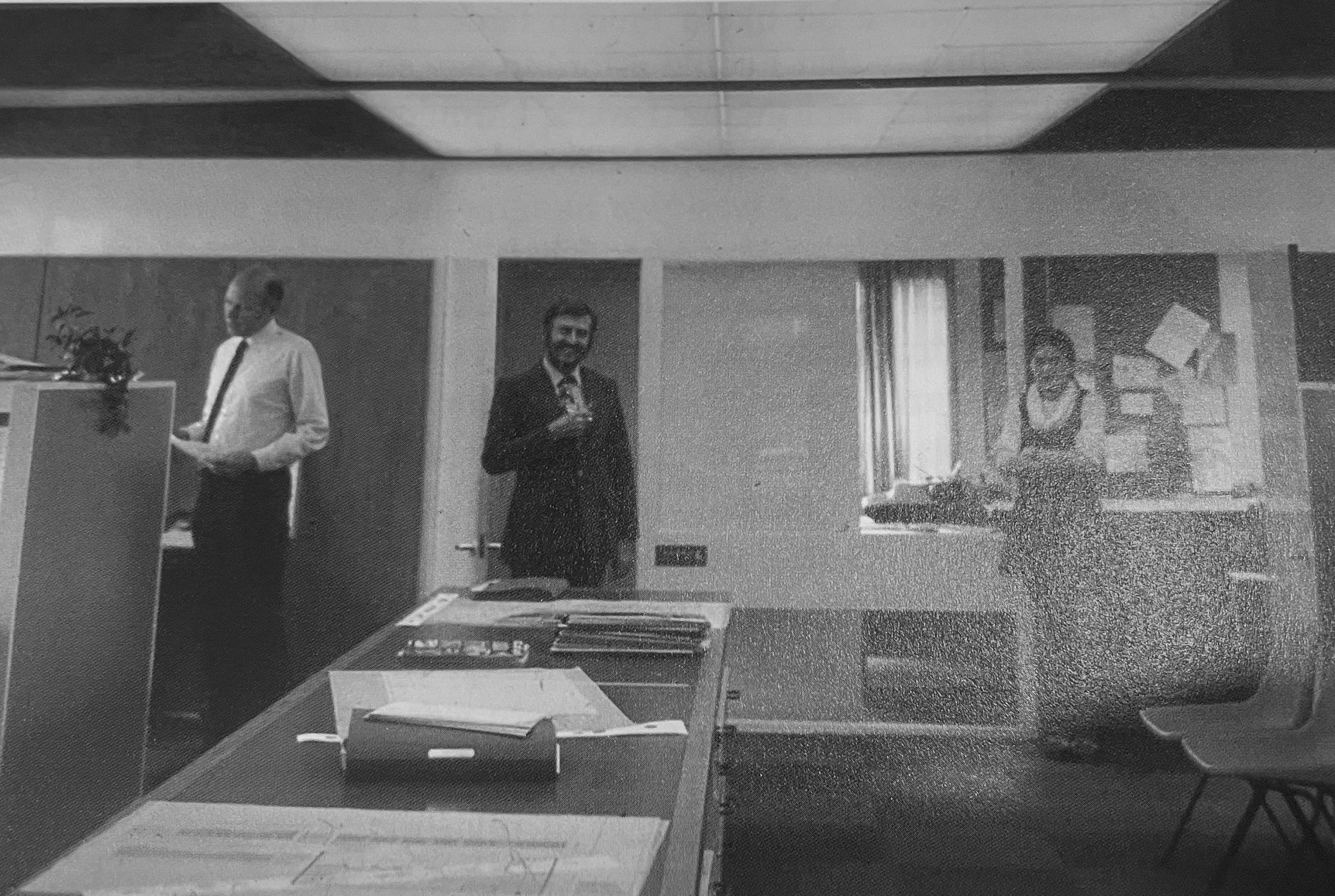
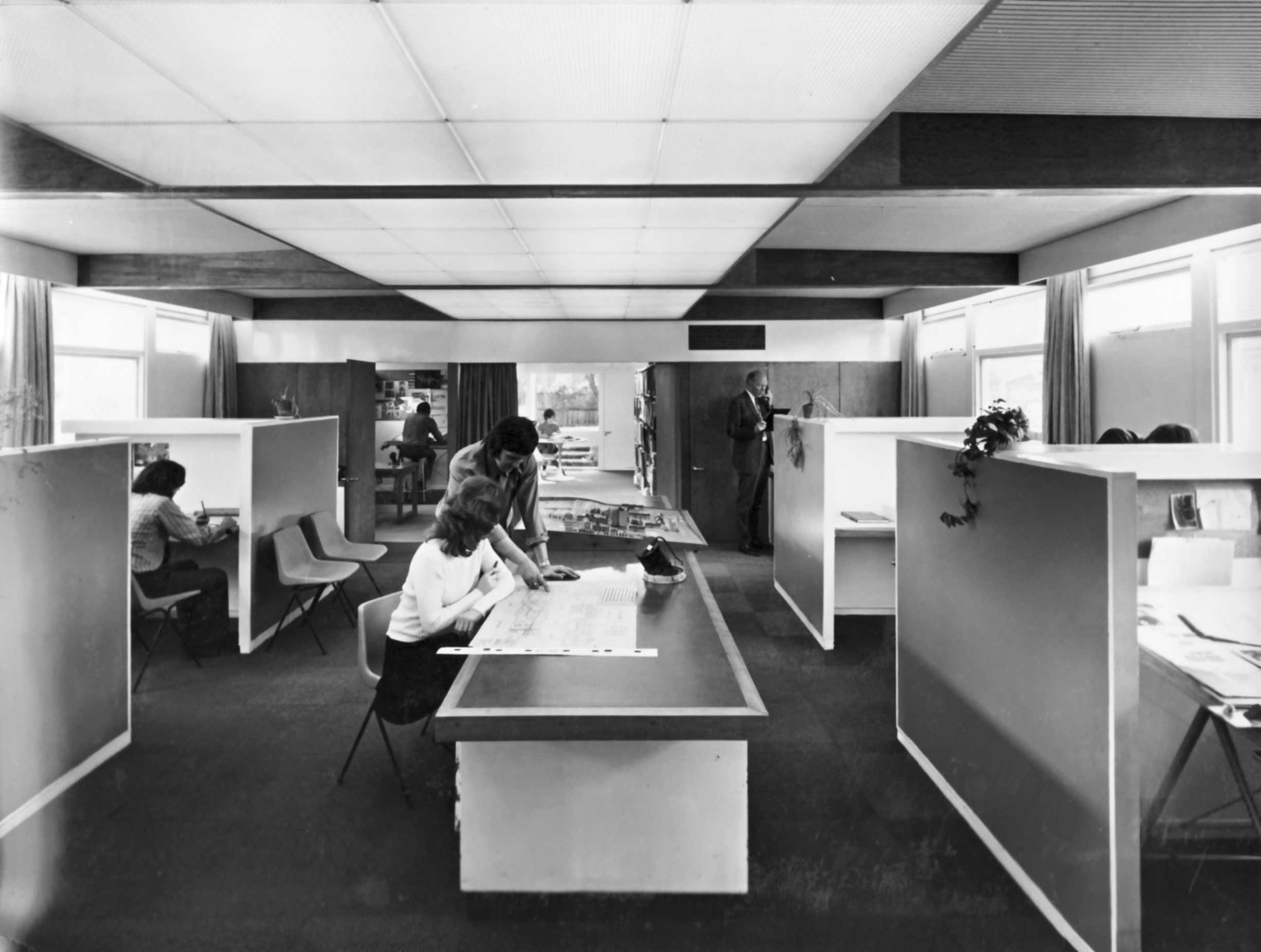
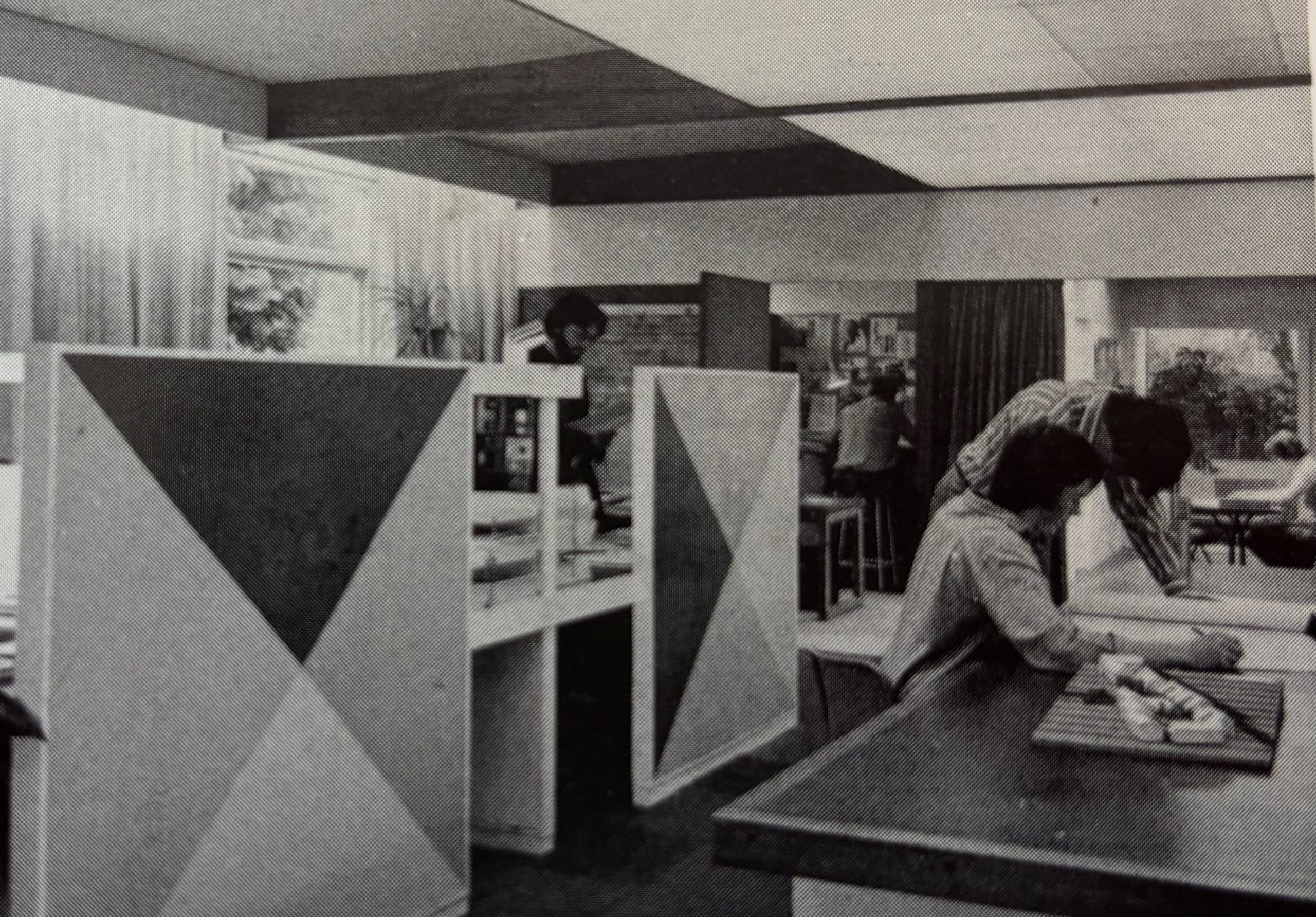
dpa Studio in Bovingdon, Hertfordshire, UK: 1959
One of the practice’s earliest and most significant commissions was the SS Oriana in 1960. Derek was appointed to advise a distinguished team of architects, including Sir Hugh Casson, Brian O’Rourke and R.D. Russell, on the lighting of the ship’s public spaces. The project helped establish lighting design as a specialist discipline in its own right and demonstrated the value of independent expertise within major architectural projects.
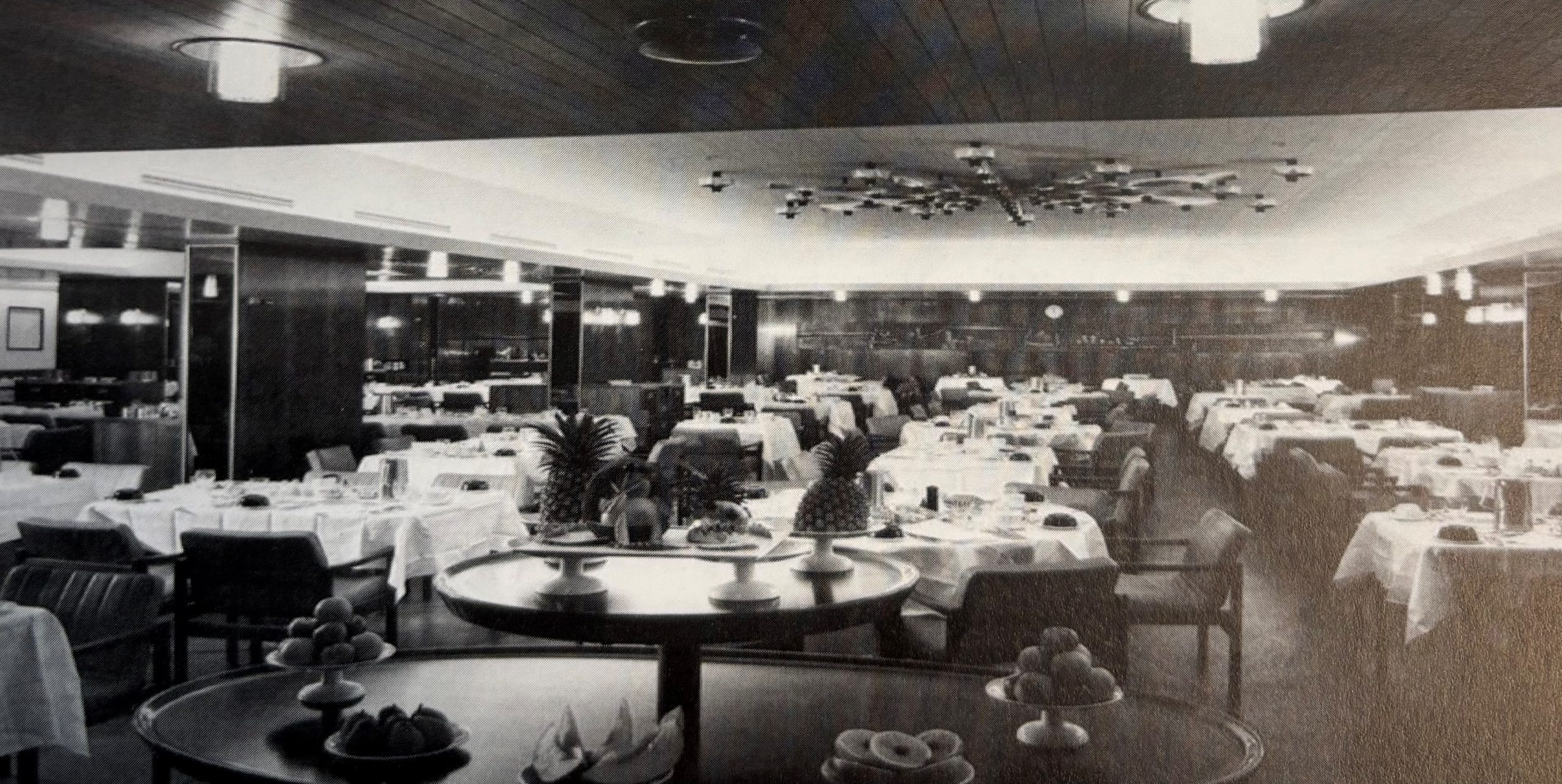
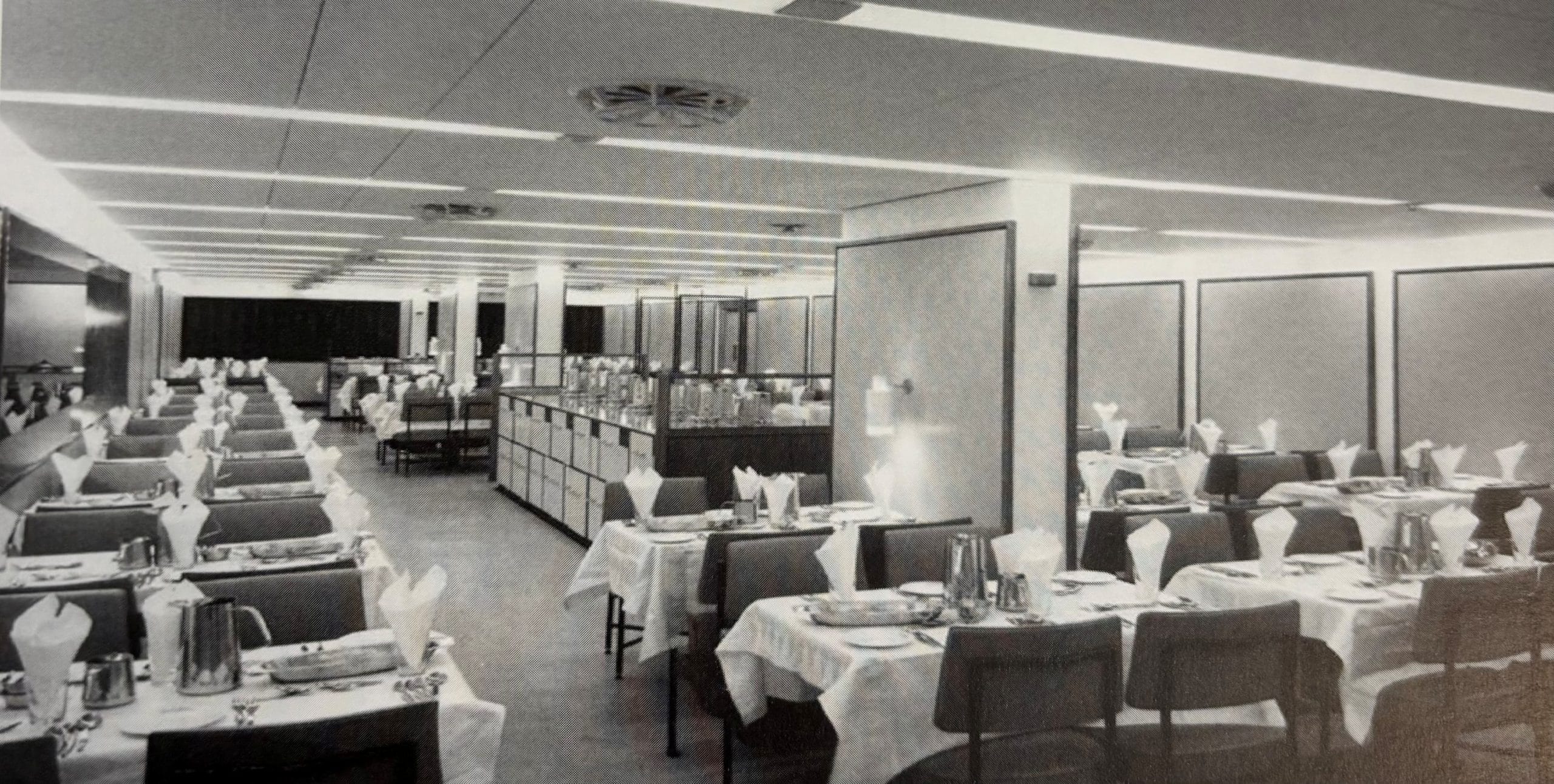
SS Oriana: 1960
Another defining moment came when the Council of Industrial Design introduced Derek to designer Don Ashton during the development of the new Mandarin Hotel in Hong Kong.
The story perfectly captures both Derek’s individuality and the still-emerging status of lighting design at the time.
“It shows how little the subject of lighting was regarded, as on arrival I was met by Don who said I might be amused by the telex he had received from London which said, ‘This chap Phillips knows something about lighting, but wears very peculiar socks’.”
Behind the humour was an important point. Don Ashton had approached Derek because he needed impartial professional advice after receiving unsatisfactory proposals from numerous lighting manufacturers across Europe and America. It was exactly the gap in the market that Derek believed independent lighting consultants should fill.

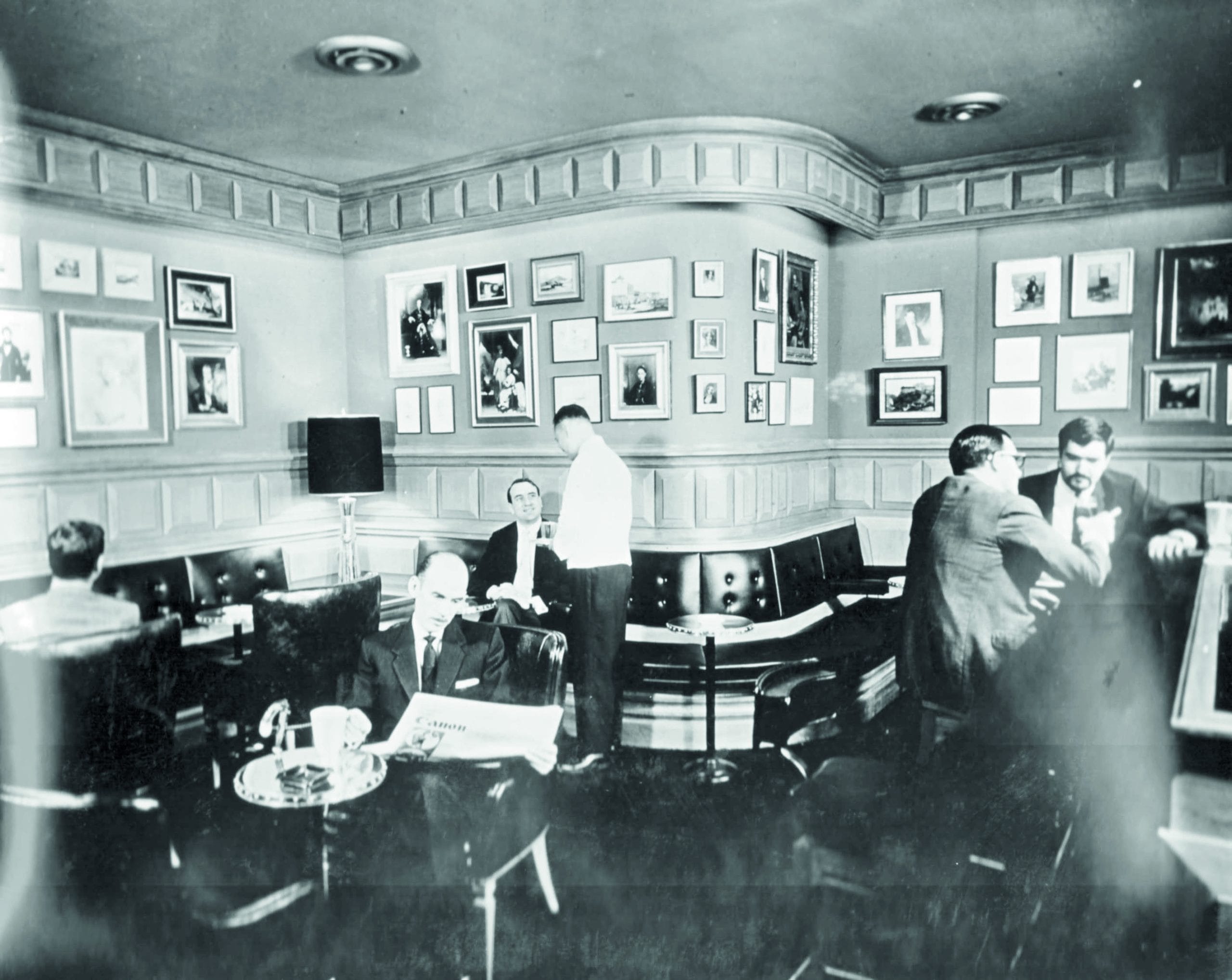
The Mandarin, Hong Kong: 1963
A Lasting Legacy
Over the following decades, Derek’s influence extended across the world. His projects included the Foreign Office buildings in Whitehall, UNESCO commissions advising on the lighting of Sri Lanka’s ancient monuments at Sigiriya, Polonnaruwa and the Dambulla Caves, as well as numerous hospitality, civic and heritage projects.
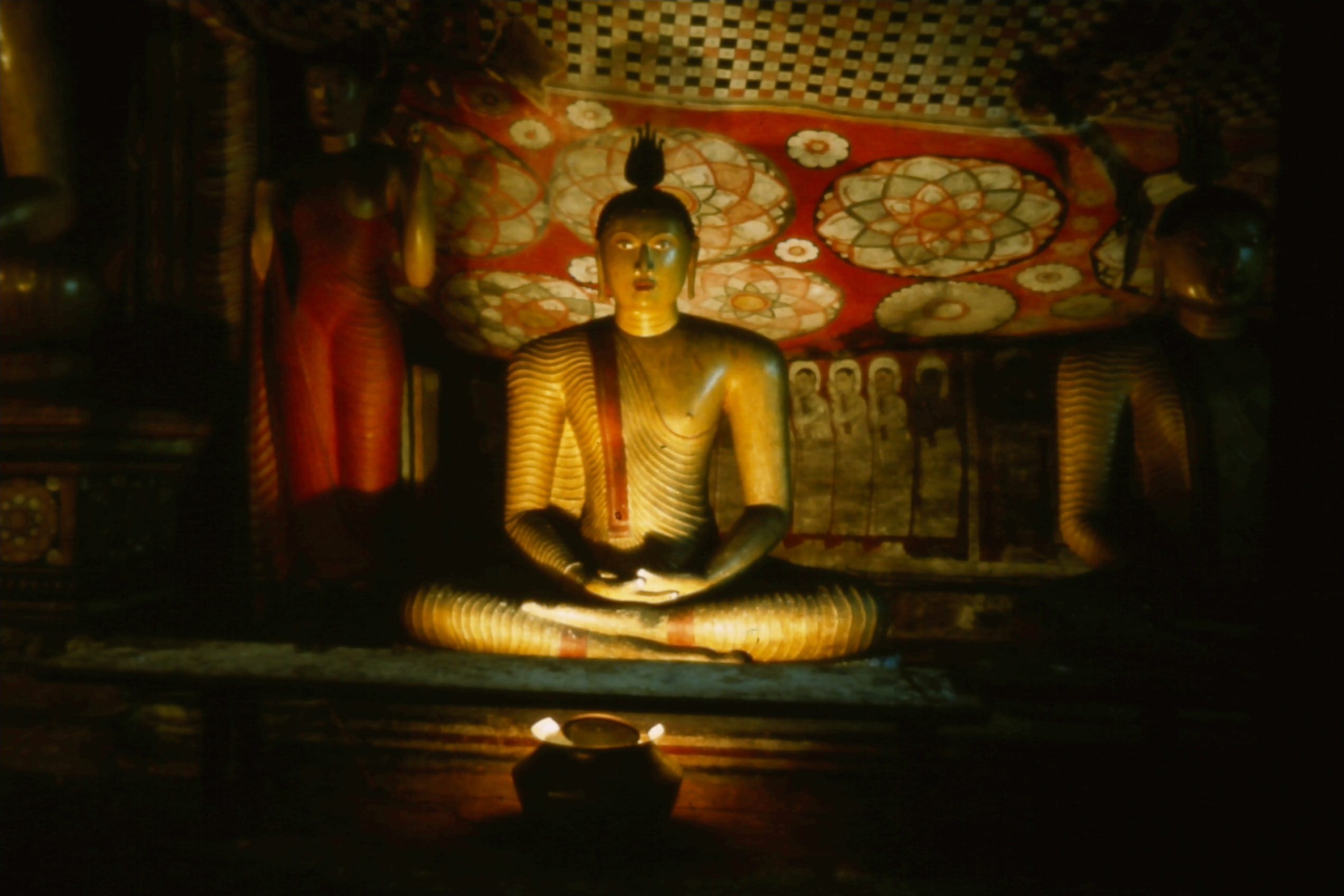
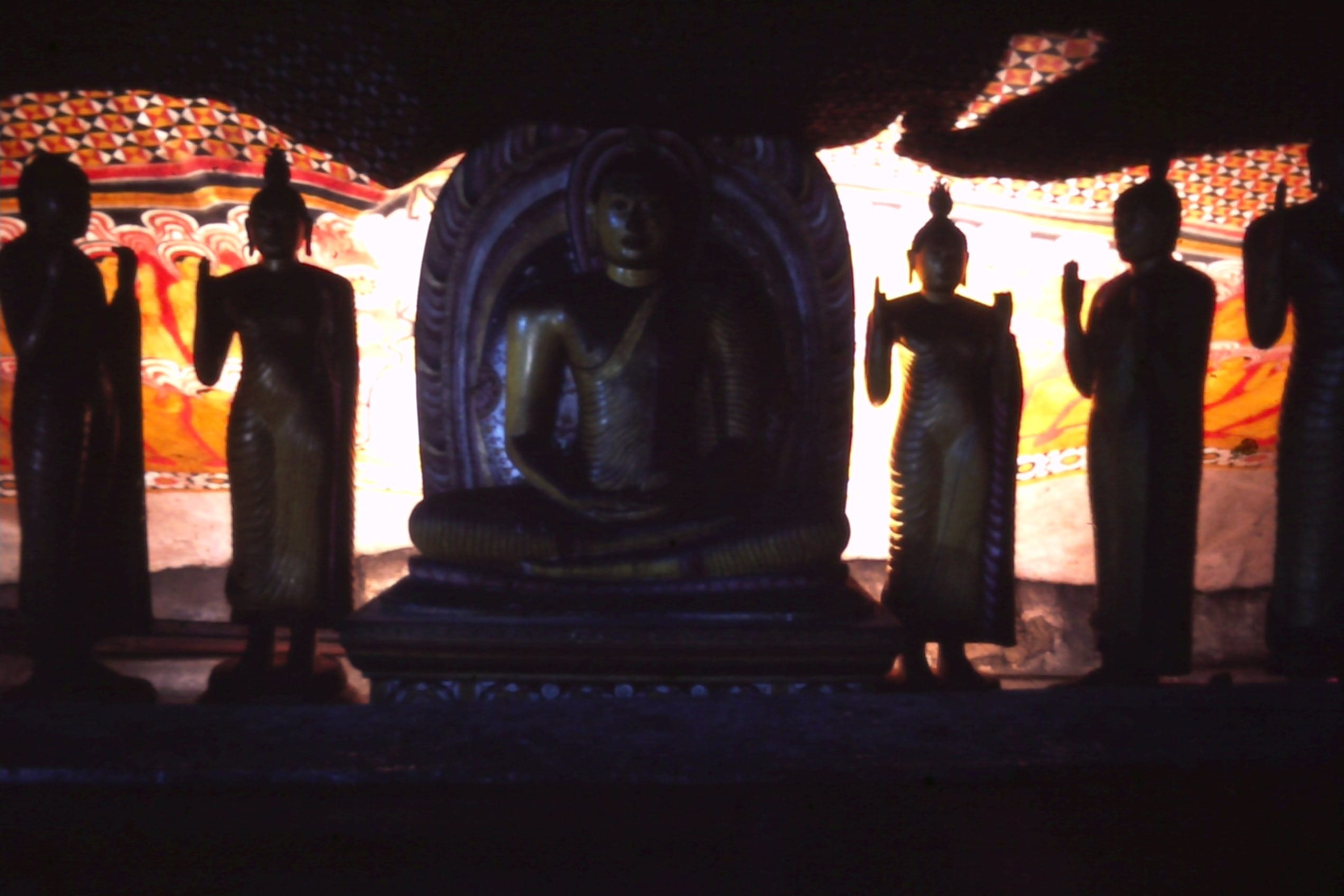
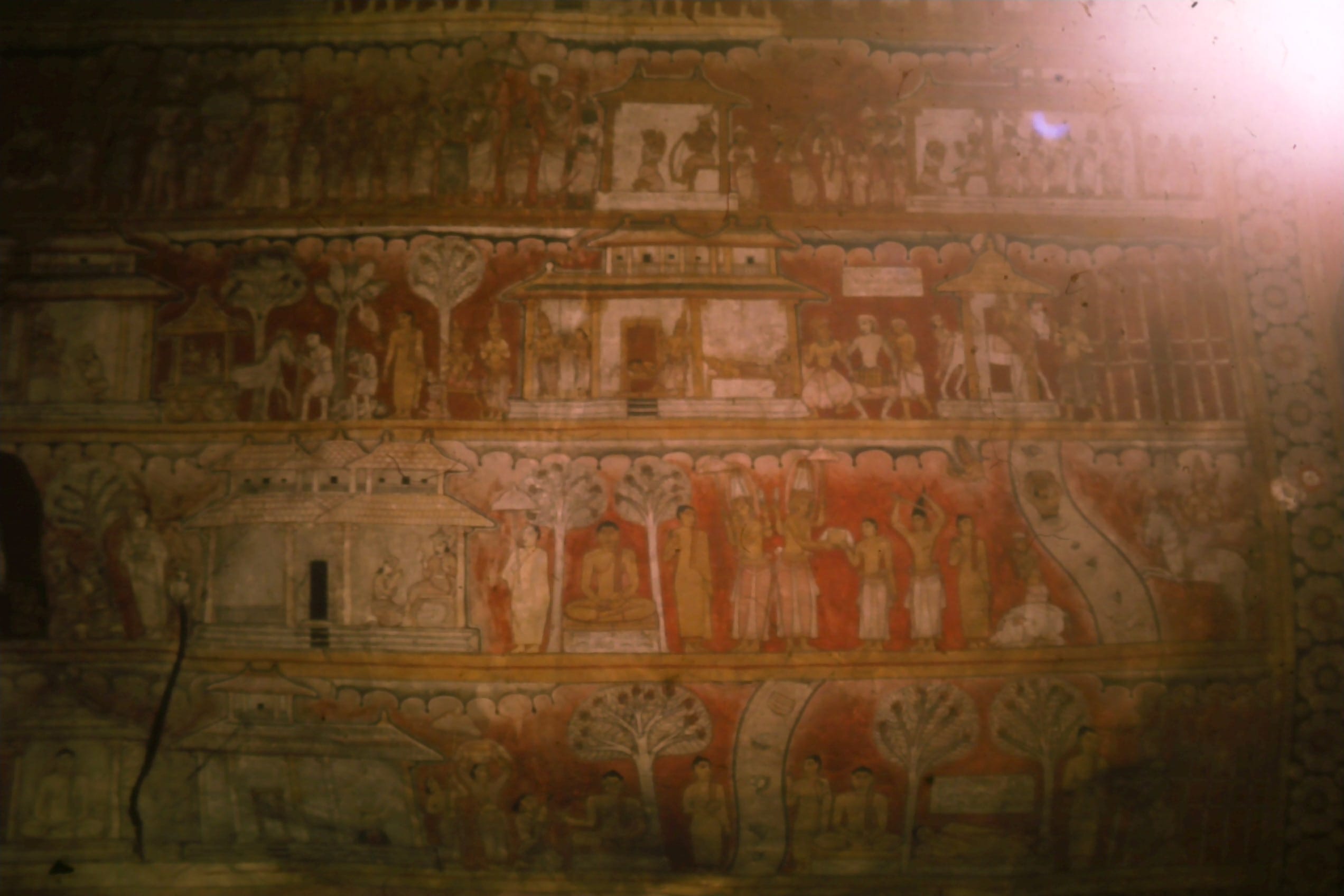
Sri Lanka’s ancient monuments at Sigiriya, Polonnaruwa, Sri Lanka


Foreign Office buildings in Whitehall, London, UK
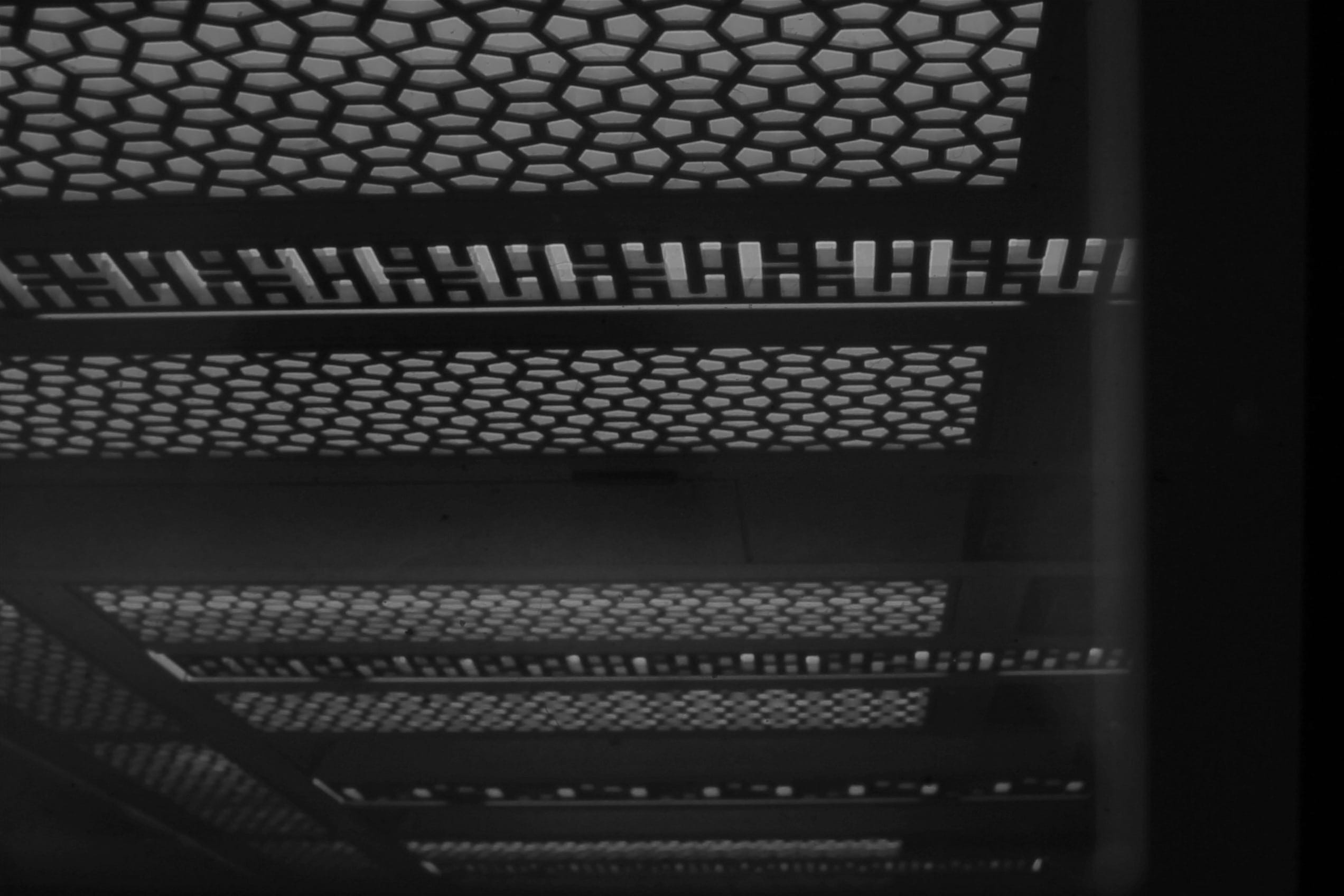
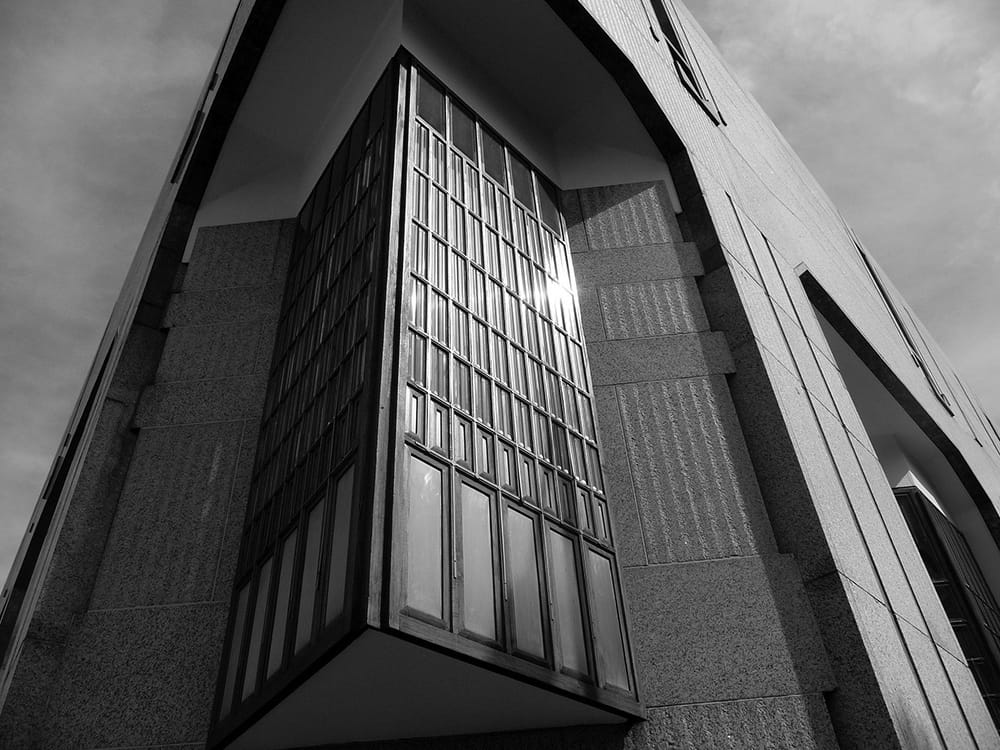
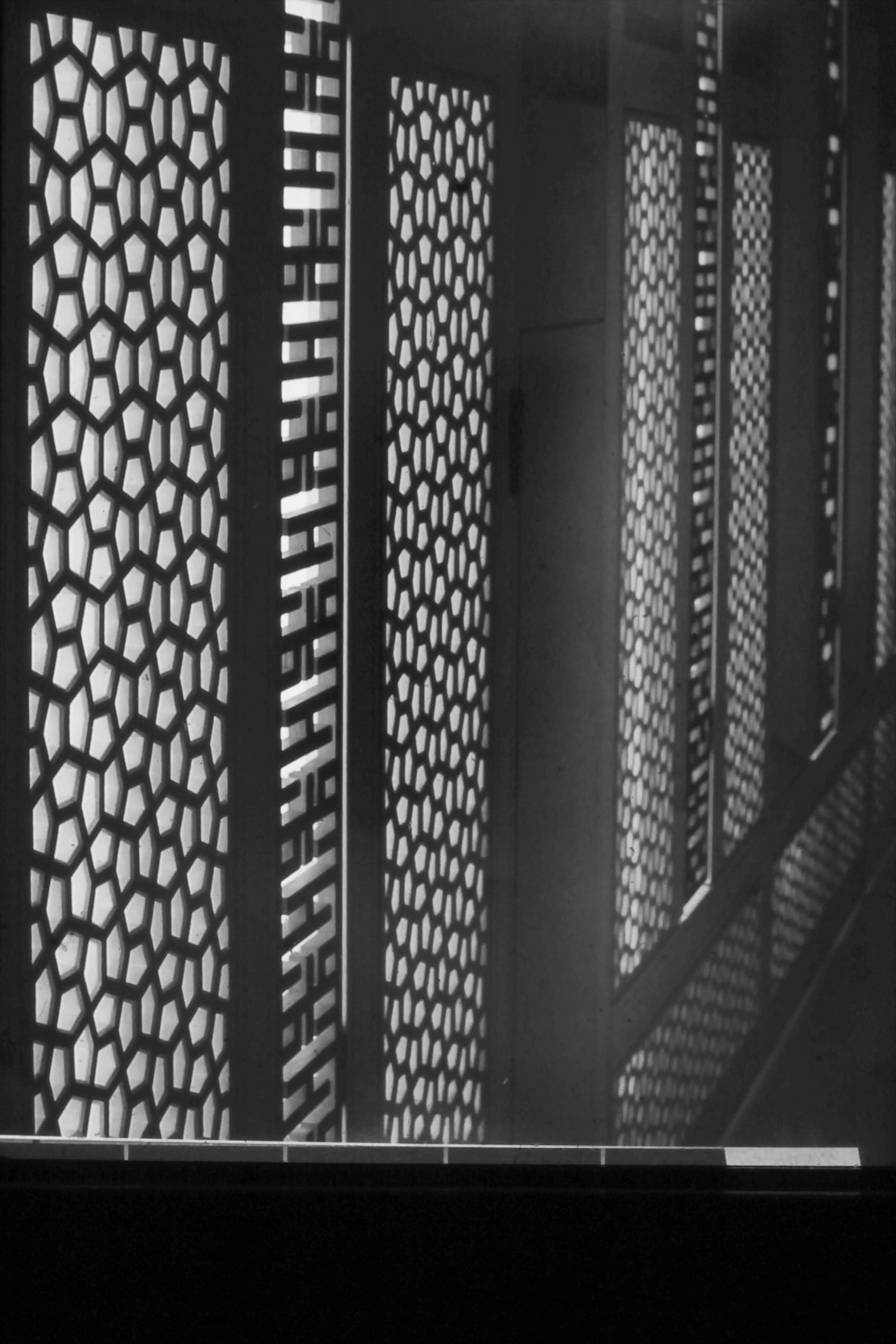
Ismaili Centre, Kensington, London, UK
When Derek handed the practice over to Nick Hoggett in 1993, he left behind far more than a successful consultancy. He had established an entirely new profession, championed the importance of light as an integral part of architecture, and created a legacy that continues to shape the practice today.

The OWO, London, UK
Nearly seventy years later, dpa continues to build on those foundations from studios in the UK, Dubai, Greece and Japan, guided by the same principle that Derek recognised during his conversations with Frank Lloyd Wright: that great lighting is not about the equipment, but about the experience it creates.
“The judgement of whether a lighting scheme is successful is made in terms of the success of the architectural whole or unity of a building and it is made by those who use the building, in the light of their experience. The building must succeed in all levels of consciousness, in the severely practical problems of vision as much as in the more subtle spatial relationship of light and shade.”
Derek Phillips – Lighting in Architectural Design, Derek Phillips, McGraw-Hill, 1964
Sources:
Five Careers and Dog, Derek Phillips, Book Guild Publishing, 2007
Lighting in Architectural Design, Derek Phillips, McGraw-Hill, 1964