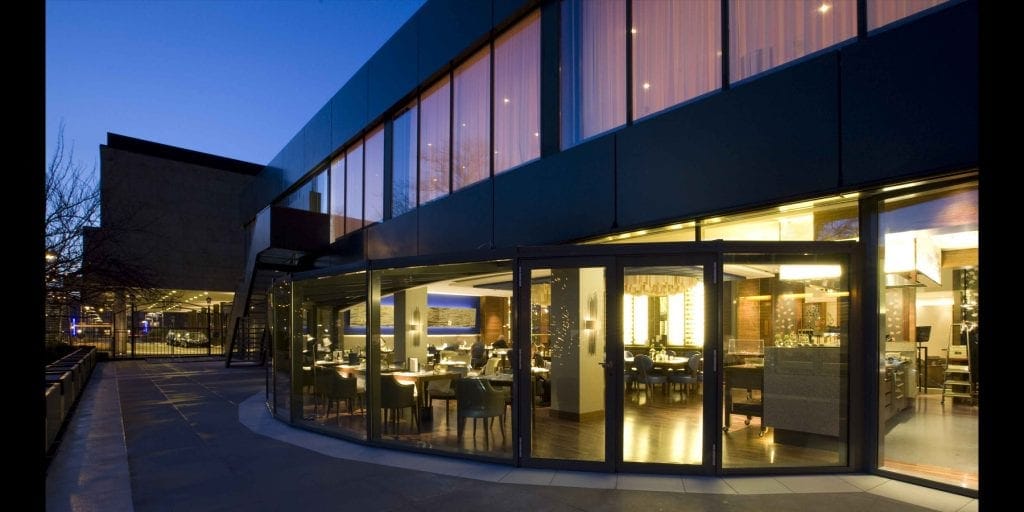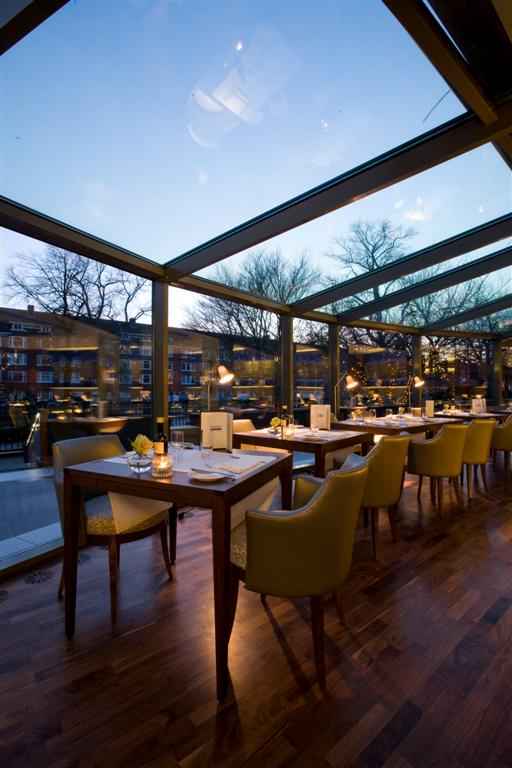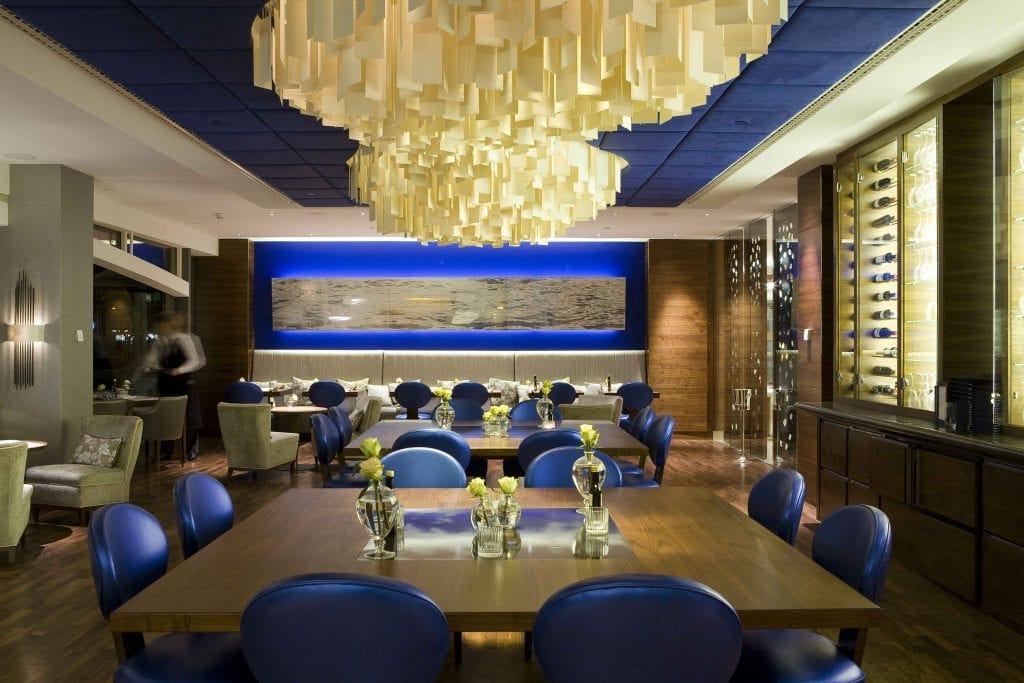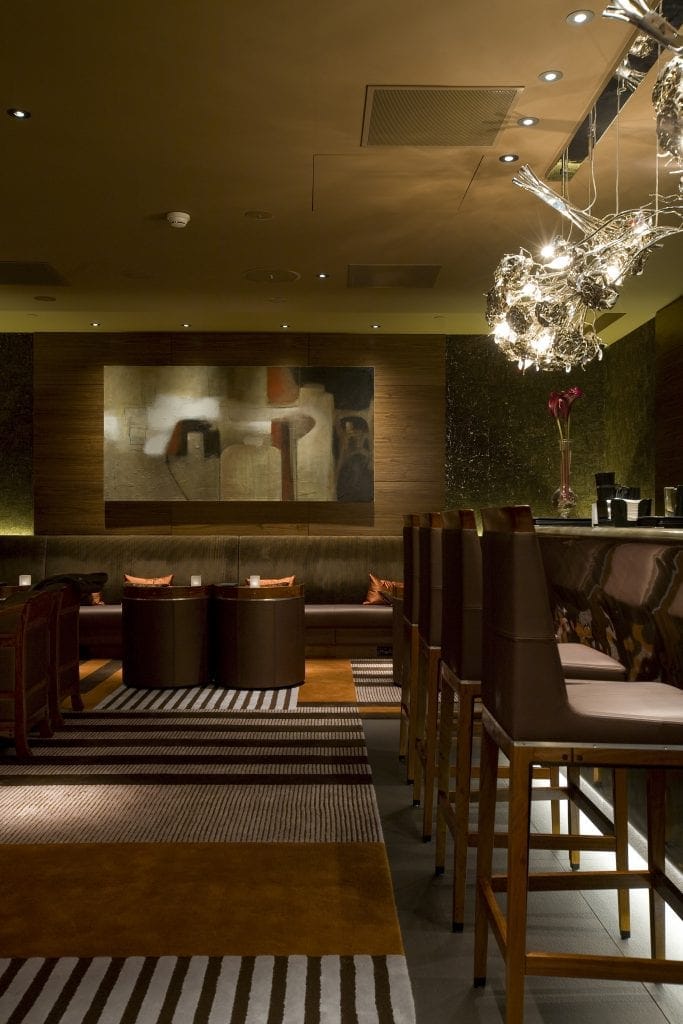
It was a delight to be asked to work at Hambledon Vineyard, established in 1952 and the birthplace of English wine. ‘The Restaurant’ within a beautiful oak framed building visually connects to the surrounding vineyards. We worked with Mowat & Company collaboratively to integrate layers of light to enhance the dining experience as can be seen from the various images.
Architect: Mowat & Company
Photography: Ellie Walpole


dpa lighting consultants have completed the newly opened luxury hotel and the first Park Hyatt in Malaysia, Park Hyatt Kuala Lumpur, housed within Asia Pacific’s tallest tower, Merdeka 118. Appointed as the lighting designers for this landmark hotel, dpa collaborated closely with world-renowned interior designers GA. The hotel’s interiors draw inspiration from a traditional Malay Kampung house, blending local craftsmanship and contemporary luxury, with a lighting scheme that emphasises texture, colour, and materiality, whilst celebrating the magnificent panoramic city views.
The hotel’s main public areas are located on Level 75, including the Lobby, Merdeka Grill, Park Lounge, and Cacao Mixology & Chocolate bar. Here, feature accent lighting draws attention to key architectural elements, most notably the perforated brass screens, etched with intricate batik canting patterns in the double-height Reception. Each space is anchored by bespoke ceiling pendants, meticulously coordinated between dpa and GA to complement the interior palette and spatial rhythm.
Throughout the hotel, dpa and GA have together created a luxurious destination with the lighting design in harmony with GA’s interior architecture, skilfully bringing out the warmth, texture, and finishes that define the space. This collaboration elevates every detail – transforming materials and views into a cohesive narrative of luxury. The result is a hotel that glows from within: a blend of natural and architectural lighting with interior design that captures the spirit of Malaysia.
Client: PNB Merdeka Ventures
Operator: Hyatt
Interior Designer: GA
Architect: Fender Katsalidis, ARUP and RSP Architects
Project Managers: Turner International
Art Consultants: ArtLink
General Contractor: Samsung C&T Corporation UEM Construction JV Sdn Bhd (SUJV)
Photography: Park Hyatt Kuala Lumpur, GA, and Jonathan Maloney – What The Fox Studio


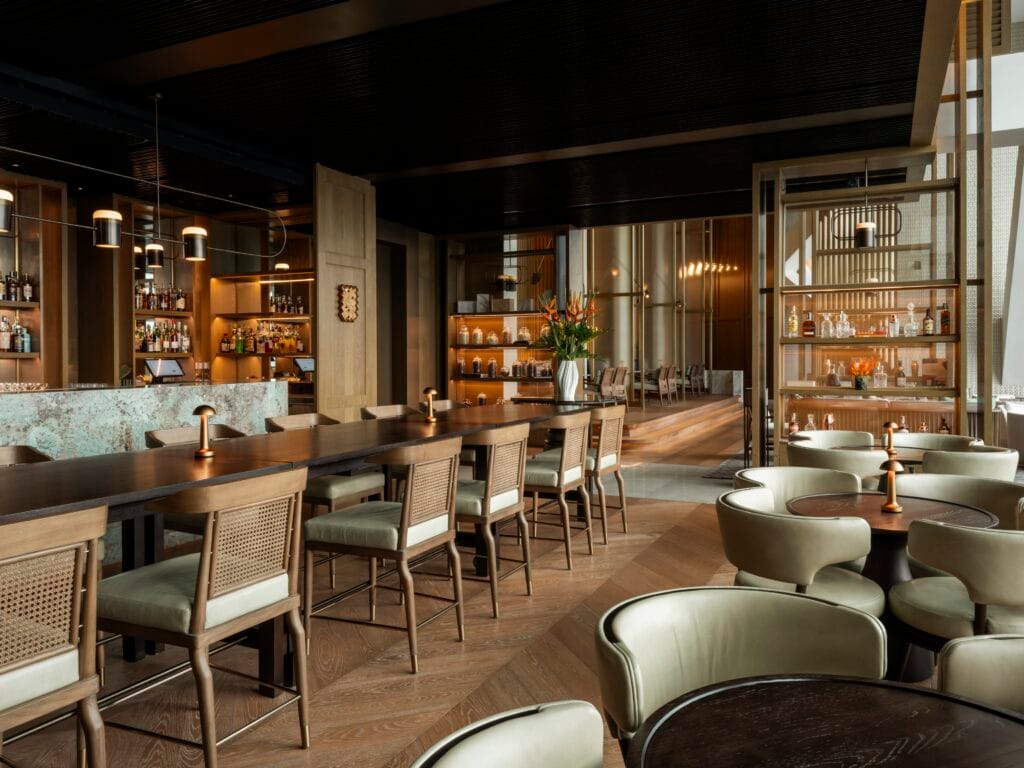


Working closely with Sherliker Biggs, dpa were tasked with designing a relaxing environment for the Executive Lounge at the JW Marriott Grosvenor House Hotel, inspired by the theme ‘Up with the lark and down with the owl.’ By incorporating tuneable white lighting, we created a bright and refreshing atmosphere in the morning that gradually transformed into a warm and cosy setting as the day progressed.
To enhance the space, we incorporated concealed linear lighting within bespoke joinery and backlit a faux window wall, harmonising with the decorative table and floor lamps selected by Sherliker Biggs. This approach successfully simulated the effect of natural daylight in an area where no actual daylight was present.
Lighting control was essential in carefully curating light levels throughout the day while also providing the hotel with the flexibility to adjust for future events.
Operator: JW Marriott
Client: Grosvenor House Hotel, London
Interior Designer: Sherliker Biggs
Project Manager: Barton Minty
Photography: Daniel Herendi


Crafted in collaboration with Director of Mixology Hannah Van Ongevalle and G.A Design, luxury cocktail bar Under The Stairs at Corinthia Brussels invites guests into a world of sensory contrast and curated elegance. This intimate venue is thoughtfully divided into two distinct atmospheres – each brought to life through nuanced lighting and rich materiality.
Tucked away like a secret, the snug offers a cocoon of comfort and intrigue. Here, guests can unwind with a cocktail in hand, surrounded by soft lighting and curated artwork. Miniature recessed ceiling spotlights delicately illuminate the gallery wall, while decorative wall sconces and picture lighting add layers of depth and drama. Lighting is seamlessly integrated into the bookcase display, creating a space that feels both personal and cinematic.
In contrast, the bar glows with warmth and sophistication. Rich materials and warm tones set the stage for social connection, while concealed lighting behind the banquette seating gently uplights an antique mirrored wall, adding a touch of glamour. Hidden lighting within the back bar highlights the spirit bottles and glassware, creating a vibrant focal point. Feature decorative lighting and intimate table lamps complete the scene, inviting guests to linger and explore.
Client: Corinthia Brussels
Client Representative: RBW Estate
Interior Designer: GA Design
Architect: Ma2
Project Managers: QPM
Procurement: Argenta Projects Ltd
General Contractor: Group Jansen
Photography: Courtesy of Corinthia Grand Hotel Astoria Brussels


KIRA Restaurant and LITT Bar Club, positioned in the newly opened Jumeirah Marsa Al Arab, Dubai explore light through serenity and energy. KIRA’s warm, layered lighting enhances Mediterranean and Japanese elegance, while LITT’s dynamic, responsive scheme transforms the space with rhythm and mood. Together they create immersive, memorable interiors that evolve from day to night.
Lighting elevates the spatial identity of both venues. At KIRA, refined layers and golden accents evoke calm sophistication. At LITT, bold contrasts and kinetic lighting sculpt a vibrant, high-energy atmosphere. Together, they create engaging environments that draw the guests into the venues, while being warm and welcoming to enjoy a long stay. Very warm colour temperatures of light are used and softened with control and concealment to bring the most out of the interior materiality.
The lighting concept responds directly to its iconic setting within the Jumeirah Marsa Al Arab. KIRA’s warm elegance complements the Mediterranean-Japanese interiors, while LITT’s energy reflects Dubai’s nightlife. Transitions between indoor and outdoor spaces reinforce the venue’s connection to its coastal surroundings and luxury context. The venues and the hotel, are of the moment with influencers wanting to be seen in and around the property. The lighting needed to feel very contemporary.
Client: Alphamind
Interior Design: Verhaal Studio
Photography: Courtesy of Verhaal Studio/ Red Spades Agency


In close collaboration with Muza Lab, dpa is proud to unveil the newly redesigned JW Steakhouse at the JW Marriott Grosvenor House Hotel, London. The interiors are characterised by dark timber panelling, textured wall finishes, and an elegant palette of velvet and leather in warm amber tones, creating a sophisticated setting for the classic American steakhouse experience.
The lighting design plays a central role in shaping the restaurant’s ambience throughout the day. Statement chandeliers and discreetly integrated linear lighting provide a fresh, inviting atmosphere for breakfast and lunch, while seamlessly transitioning into a soft, ambient glow for evening service. Battery-operated table lamps deliver both practical illumination and an intimate, low-level lighting experience across dining tables and booths.
A key highlight of the redesign is the Bourbon Bar, inviting residents and guests to explore a curated collection of over 500 rare, single-batch bourbons. To enhance the golden hues of the spirits, dpa specified a tuneable white light sheet beneath the bottles, allowing them to be beautifully lit from within. Each shelf also features a miniature recessed linear light at the front edge to subtly illuminate the labels, creating a striking, jewel-like display that draws attention and invites exploration.
Lighting control was essential in carefully curating light levels throughout the day while also providing the restaurant with the flexibility to adjust for future events.
Operator: JW Marriott
Client: Grosvenor House Hotel, London
Interior Designer: Muza Lab
Contractor: Barton Minty
Photography: Daniel Herendi and dpa Lighting Consultants
-

- JW Grosvenor House Club Lounge


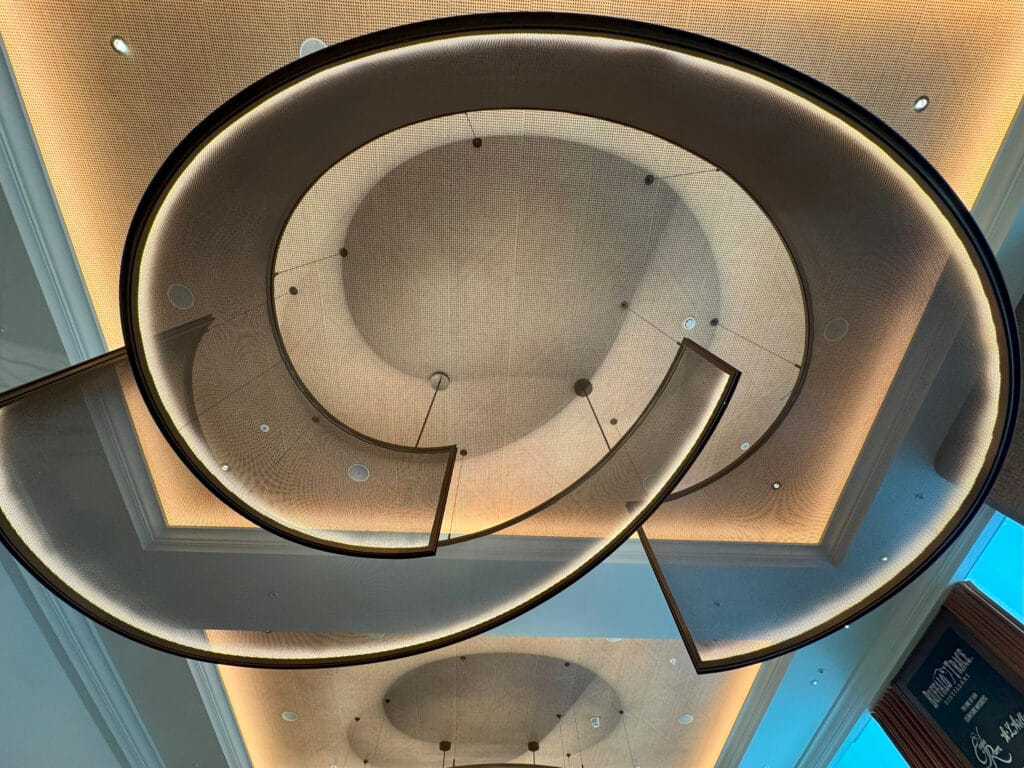

Rosewood Amsterdam is housed in the city’s historic former Palace of Justice – a building with a layered past. Originally constructed in the 17th century as an orphanage, it underwent a dramatic transformation in the 1820s and served as Amsterdam’s criminal courts for the next 200 years. dpa joined the project a year into its decade-long renovation, a process made more complex by the building’s classification as a national monument. This status demanded a careful balance between restoration and modernisation, ensuring the integrity of the original structure was respected. Collaborating with Kentie Architecten (Lead Architect), Studio Piet Boon, and Sagrada, the team worked to transform the austere, institutional architecture into a warm and inviting Rosewood hotel.
Sagrada brought their signature “restrained opulence” to the Advocatuur bar. The space is thoughtfully divided into three distinct zones, each defined by rich colour palettes and ambient decorative lighting. At its heart lies the striking distillery—deep blue walls and gleaming copper equipment set the stage for a truly immersive experience. As night falls, subtle lighting from the distillery and table lamps creates an atmospheric setting to enjoy house-distilled Jenever in exceptional surroundings.
Owner / Developer: CTF Amsterdam B.V.
Operator: Rosewood Hotel Group
Project Manager: C&R Hospitality Services
Lead Architect: Kentie Architecten
Architect of Record: Archer Humphryes Architects
Interior Designer: Sagrada
Photography: Courtesy of Rosewood Hotel Group © Chantal Arnts


dpa had the pleasure of collaborating with the Designer, Henry Chebaane of Blue-Sky Hospitality on the stunning new restaurant Olivina situated within Castelfalfi’s breathtaking 1,100-hectare estate in the heart of Tuscany.
The elegant entrance vestibule invites the guests through the intimate lounge into the main restaurant, where they are greeted by a striking overlapping ceiling feature and layers of concealed lighting integrated within the beautifully crafted furniture. With locally sourced food, stunning panoramic views of the incredible landscape, and carefully coordinated lighting, the new restaurant is a theatre for all the senses.
Client: Castelfalfi
Designer for Olivina Restaurant: Blue Sky Hospitality
Photography: Courtesy of Castelfalfi


It has been a privilege for us to work on many projects with Dennis van Slimming in Amsterdam over the last 30 years. Café Restaurant Dauphine was established about 18 years ago and dpa worked with Dennis van Slimming and Charles Hollenkamp on the original project, so when we were recently asked to be part of the team to refresh this esteemed eatery we were of course delighted to do so. The essence of the property in this large double height volume has been retained but the lighting altered to provide a softer warmer feel with decorative lights hanging down at lower levels than the previous more architectural fixtures at high level. Other elements are also softened with warm LED light sources and a great emphasis put on the human level. The lighting controls facilitate appropriate scenes responding to the time of day/day light. The food and service are also fabulous so a great place to visit if you are in this city.
Representative – Premises Owner: Dennis van Slimming
Restaurant Owner: Charles Hollenkamp
Interior Designers: Nicemakers


Owner and Client, Parkland has recently launched South East China’s newest 5 star hotel to become the latest jewel in the Shenzhen Bay area.
dpa were very proud to be part of the design team under interior designer LW Design Group who were responsible for the interior Public Areas, F&B, Spa and Guestrooms, and GA Design International who were responsible for the top three floors of the building where the Chinese Restaurant, Private Lounges and the Signature Long Bar are located. dpa were involved from the very outset of the project from concept through to completion and final setting-up stages on site.
The interiors are large spaces with a contemporary Chinese feel employing rich materials, artwork, and finishing. The lighting needed to respond to the interior design and enhance the focal points of interest, whilst being inviting and conveying a sense of luxury typical of a Raffles hotel. All lighting equipment was locally sourced and detailed within the interior fabric to be as integrated as possible.
Owner and Client: Parkland
Operator: Raffles Hotels & Resorts
Project Manager: Parkland
Interior Designer: LW Design Group and GA Design International
Photography: Courtesy of Parkland and Raffles Hotels & Resorts


The food and beverage offerings within the hotel include LAVO, a sophisticated Italian restaurant with coastal flair, from Tao Group Hospitality, along with the vibrant The BoTree Bar by Concrete Amsterdam. LAVO’s sumptuous and delightful interior is warm in both materials and light throughout. The inviting booths are framed by a feature backlit wall spanning over both floors of LAVO with softly lit greenery and bespoke decorative lighting. The BoTree Bar provides a vibrant space that transforms from day to night through an illuminated colour-changing light feature that spans across the ceiling. The teal marble bar curves across the space with a backdrop of illuminated bottles and curated artworks on display.
Architects: EPR Architects (Lead) & Orbit Architects (Implementation Architects)
Interior Designer: Concrete Amsterdam and Tao Group Hospitality
Project Managers: Buro Four (Lead) & Gleeds (Cost Managers)
M&E Consultant: Introba
Photography: Courtesy of The BoTree – Photographers: John Carey, Adam Parker


Where Tokyo meets Tulum, Los Mochis is the global pioneer of pairing Mexican and Japanese cuisines, showing off the vibrancy, passion, and heat of Mexico while celebrating the cool elegance and precision of Japan. Elevated above Broadgate Circle, the venue offers unparalleled panoramic views of London City. This distinctive restaurant provides the guest with varied dining experiences, from the vibrant main dining area with sushi bar to a scenic rooftop terrace, intimate private dining room, and luxurious Agaveria & Lounge. Each space offers its own distinctive ambience away from the bustle of the city below.
The vision for the project came from Markus Thesleff of the Thesleff Group, with Interior Design by OV & Co and Architects Woods Hardwick. dpa created a carefully integrated lighting scheme, incorporating Agave fibre pendants and a hand-woven willow tunnel by willow artist Cherry Chung. These are fully tuneable white to allow a fresh neutral white during the breakfast scene through to a warm candle-lit glow during the evening, creating an intimate dining experience in contrast to the surrounding towers of the Square Mile.
Client: Thesleff Group
Interior Designer: OV & Co
Architect: Woods Hardwick
Project Manager: G&T
Photography: Courtesy of Adam Lynk


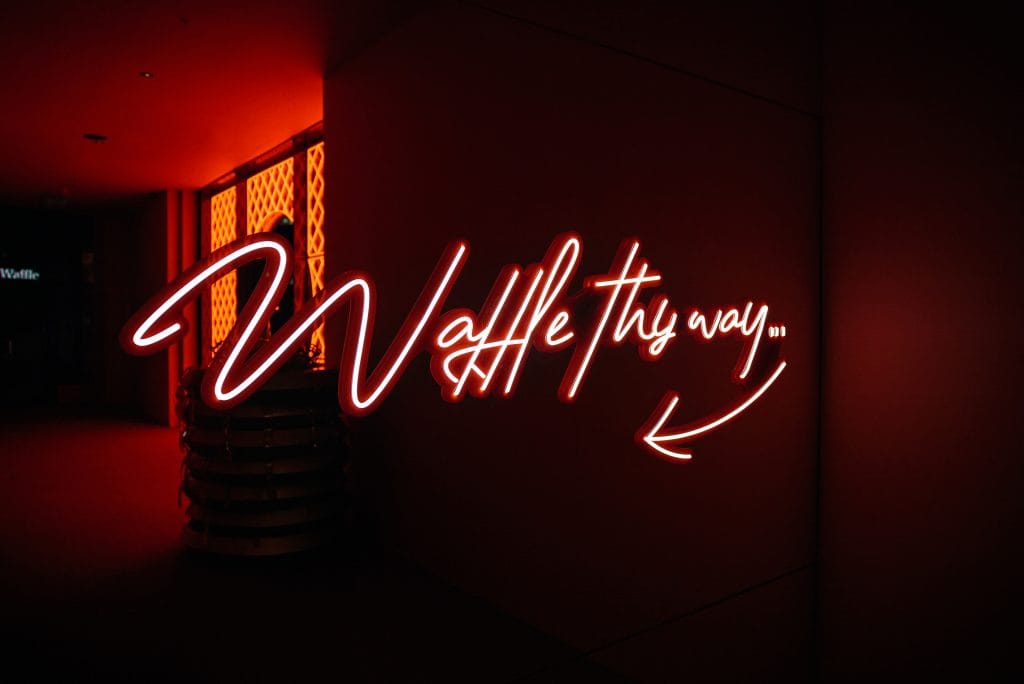
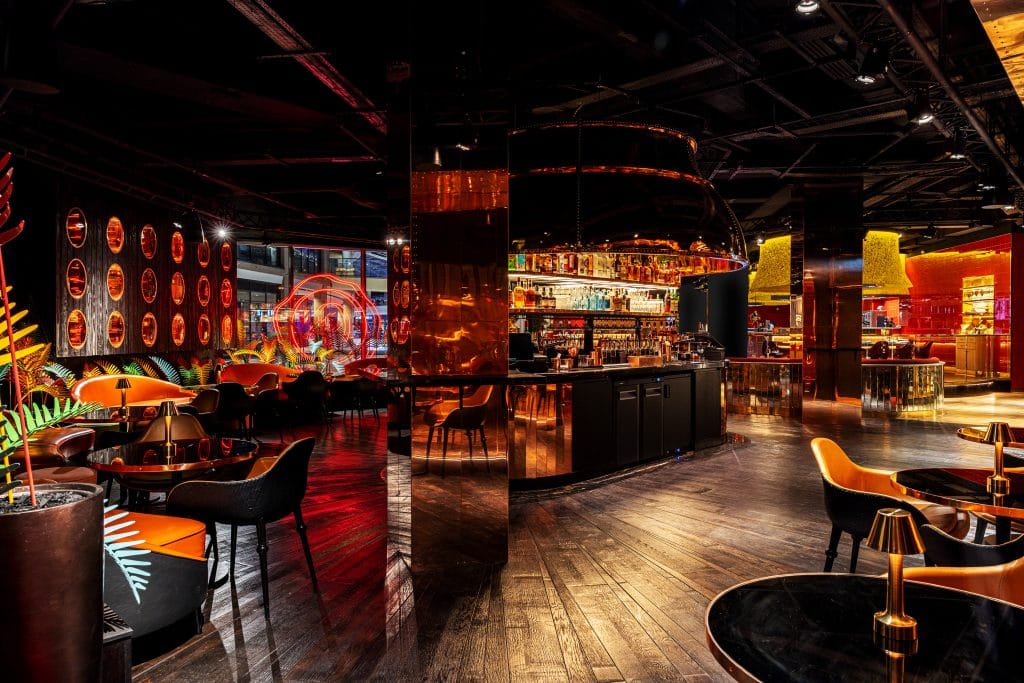
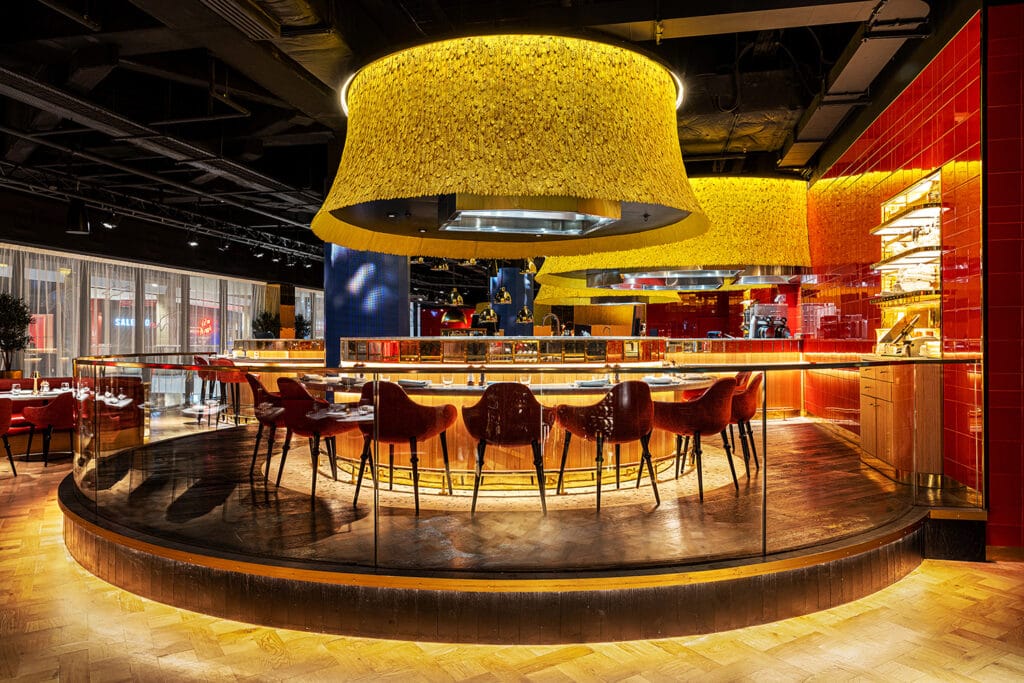
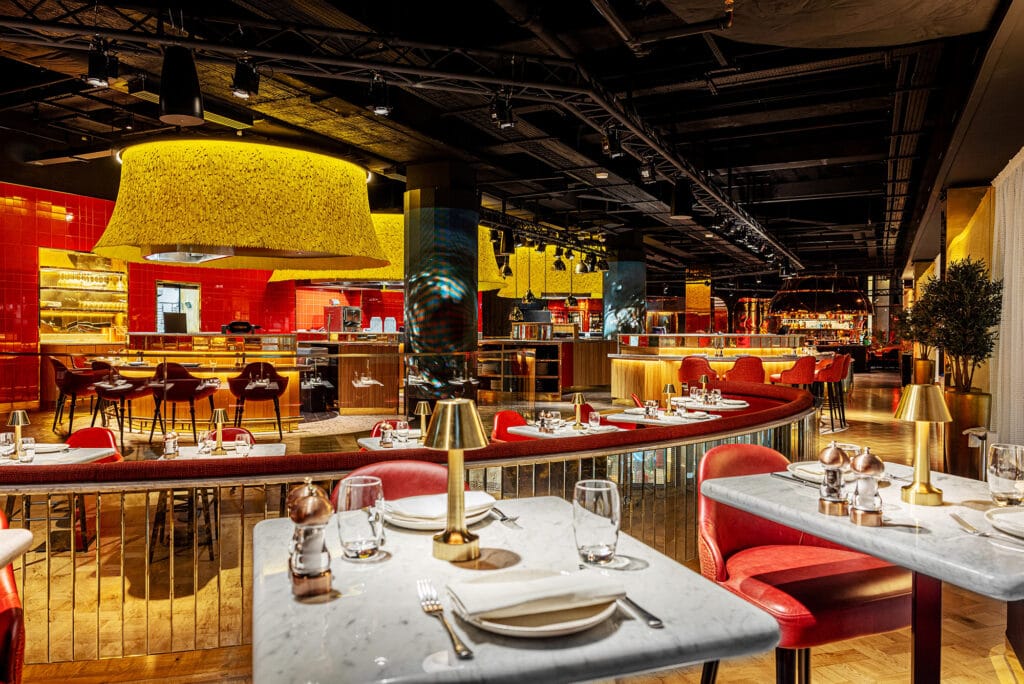
Continuing our relationship with Fabled Studio, dpa are pleased to present Duck & Waffle, Edinburgh. This exciting, saturated, surrealist neon dream was a fantastically fun experience for our designers. Warm–dim, quasi-theatrical projectors form the backbone of the lighting scheme, suspended from theatrical trussing at high level and producing dramatic accentuation for the dining tables.
Integrated linear LED is tucked within concealed detailing throughout and is particularly effective around the live kitchen / dining stations, which are all presented on an elevated stage platform, floated with light. Flat panel LED lighting is integrated into the bar and service station shelving to create sparkle through the bottles and glassware. At the open bar, this is all reflected inside a giant, polished whiskey still canopy above.
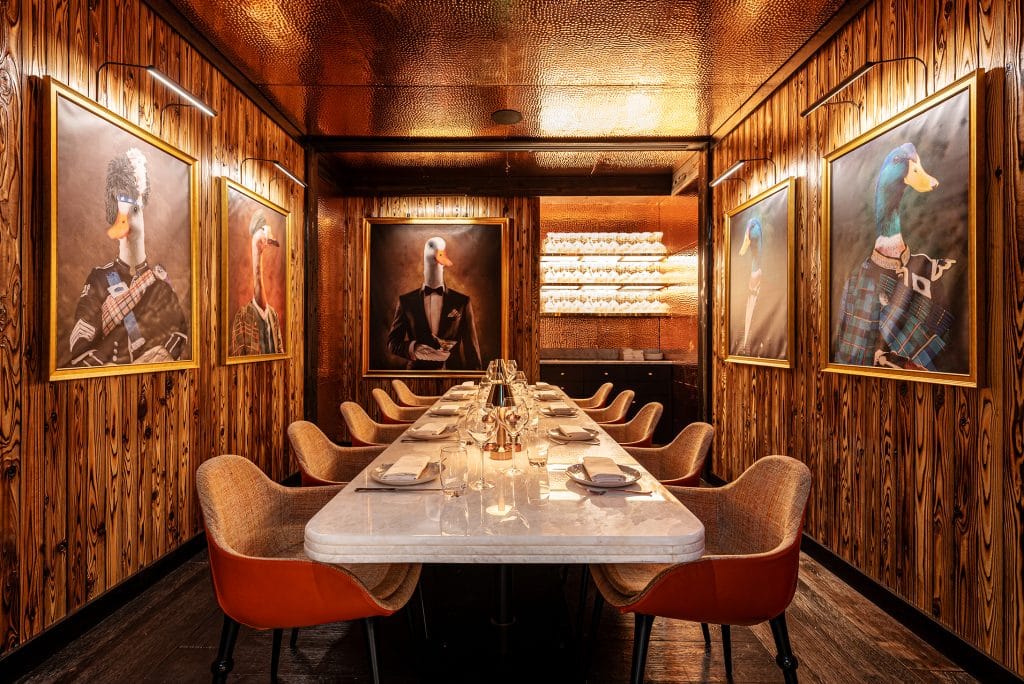
Modernity is mixed with tradition in the private dining spaces, where you can dine with an audience of refined Scottish waterfowl, all properly illuminated with dedicated artwork lighting. The scheme is brought together with neon signage throughout.
Client: SUSHISAMBA
Project Manager: Gardiner & Theobold
Interior Designer: Fabled Studio
Photography: Courtesy of Duck & Waffle
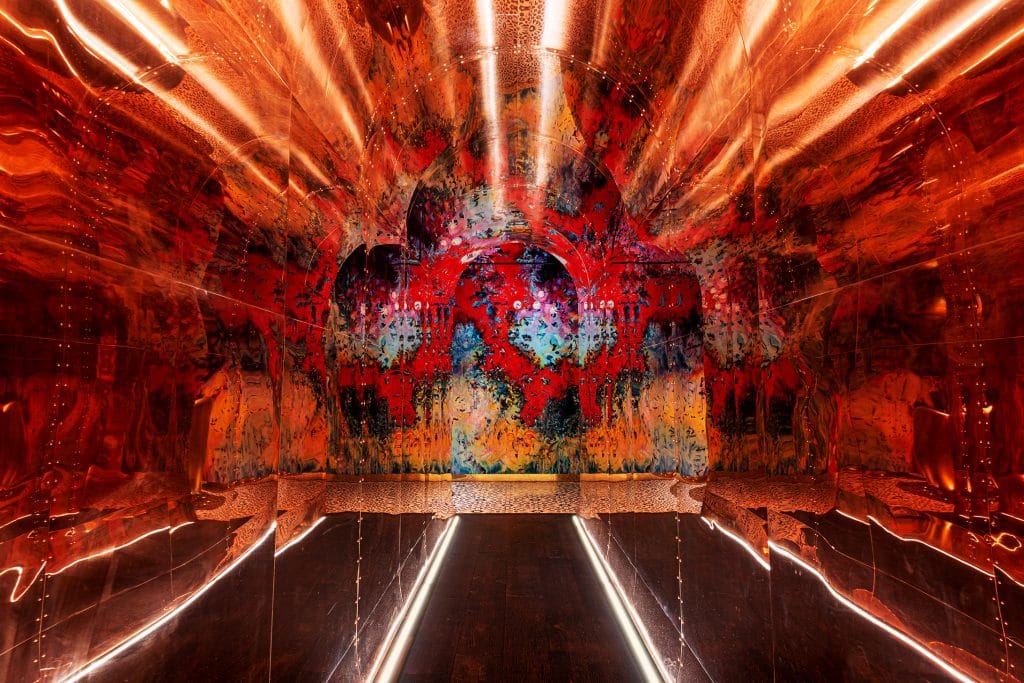
Situated on Hanover Square, Mayfair’s oldest square, Mandarin Oriental Mayfair, London has been described as the sleek, younger sister to Mandarin Oriental Hyde Park, London. Designed by the internationally renowned RSHP, it has been built using a Vierendeel structure to maximise internal space. Guests enjoy 50 spacious and luxurious guestrooms and suites, outstanding dining & bars and a sumptuous spa. A warm and inviting atmosphere radiates within this dramatic restaurant designed by Tokyo-based Curiosity, with the elements of earth, wind, and water inspired by the local parks and squares within Mayfair, London. The breathtaking triple-height sky roof and marble, circular staircase leading into the space marries with the exquisite décor. The senses are stimulated with a dramatic steam-bent wood wall sculpture by British artist Charlie Whinney.
The Spa offers further sanctuary deep in the heart of the hotel. The 25m pool, said to be the longest indoor pool in Mayfair, sparkles with the reflection of a myriad of handblown glass wall lights, and features custom mosaic tiles that fade from refreshing light blue at one end to a soothing dark tone at the other.
The guestrooms and suite, designed by Studio Indigo, use cleverly interlocking volumes with concealed lighting to allow more generous ceiling heights. Linear LED, concealed in the wainscot panelling, gently uplight the luxurious hand-painted silk wallpaper featuring magnolia flowers, a nod to the trees found in Hanover Square, whilst the chinoiserie design is a subtle reference to the hotel’s Group oriental heritage.
All the lighting uses Dim to Warm technology, transitioning from a bright fresh scene in the morning to a warm cosy candlelit atmosphere in the evening, ideal for relaxing after a hard day shopping!
Owner: Clivedale
Operator: Mandarin Oriental Hotel Group
Architect: RSHP
Interior Design Guestrooms: Studio Indigo
Interior Design Public Areas: Curiosity
Photography: Courtesy of Mandarin Oriental Mayfair; photographer: George Apostolidis


Dominating the densely populated skyline of Dubai, One Za’abeel is the latest development to add a unique and imaginative first to Dubai’s long list of record-breaking buildings. Dissecting One Za’abeel’s skyscrapers one hundred metres above the ground, The Link stretches to an impressive two hundred and thirty metres in length, whilst its record-breaking cantilever extends sixty-seven metres beyond the development’s main tower. The cantilever is home to eight Michelin-inspired restaurants and the UAE’s longest suspended infinity pool.
Developing the design over the last eight years, dpa were involved in every aspect of the design process. Bringing a multitude of differing skills from our international studios, dpa worked with all designers, architects and stakeholders to deliver a truly stunning world-class development and One & Only’s first urban resort. A multitude of design and pragmatic challenges faced all consultants on an almost weekly basis. From illuminating the infinity pool through to on-site changes to the final late-night commissioning and set-up, dpa were continually involved as part of the design and delivery team, to solve each of the issues.
Entrances, Receptions and Public areas were all treated sympathetically and in line with the interior and brand vision. Subtle and sophisticated colours and textures have been highlighted to provide the warmth and ambience resonant with a hotel of this calibre. Ballrooms are majestic but with the flexibility required of a modern conference and venue environment. Lighting integration within guest rooms has been carefully balanced to maximise the outward views after dark. However, with its plethora of restaurants and late-night destination bar, Sphere, it is the Link Bridge that steals the show.
The building brings a new dimension to Dubai’s iconic night-time identity and one in which dpa are proud to have been an essential and intrinsic part.
Client: Ithra/Mace
Architect: Nikken Sekkei
Interior Design: Denniston, LW Design Group, HBA, Rockwell Group, SquareM, Social F&B by Design
Operator: Kerzner/One & Only
Photography: Gavriil Papadiotis


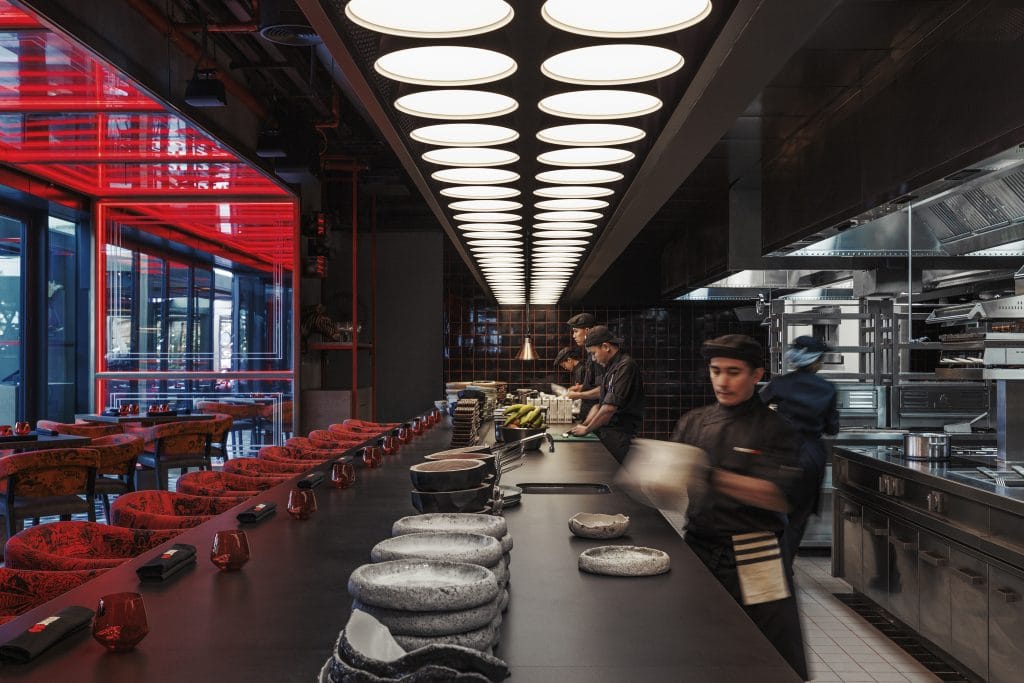


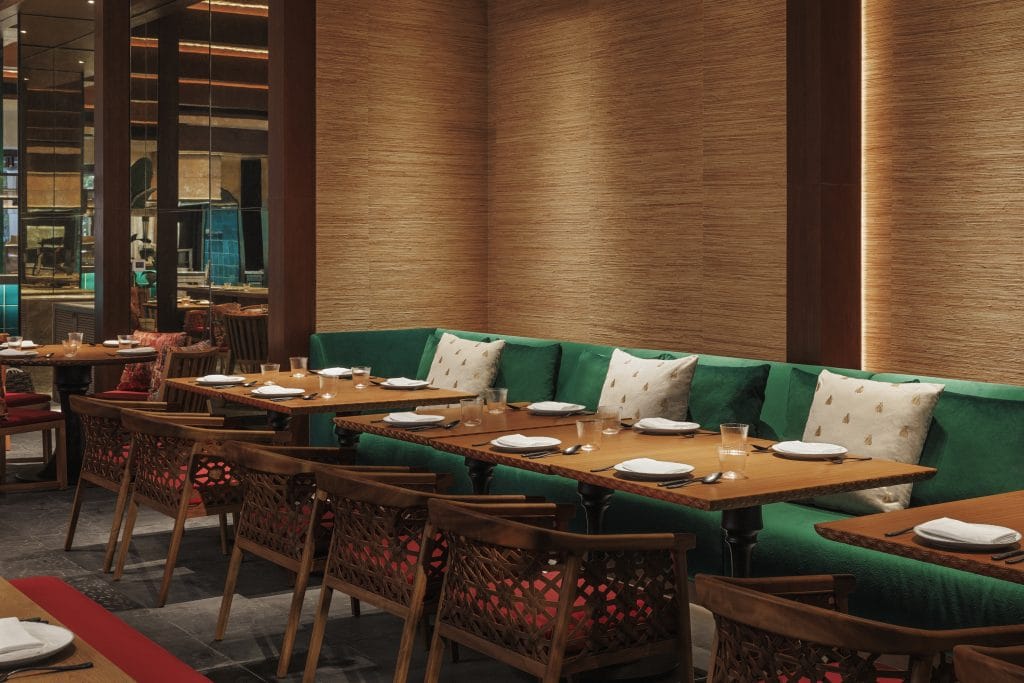

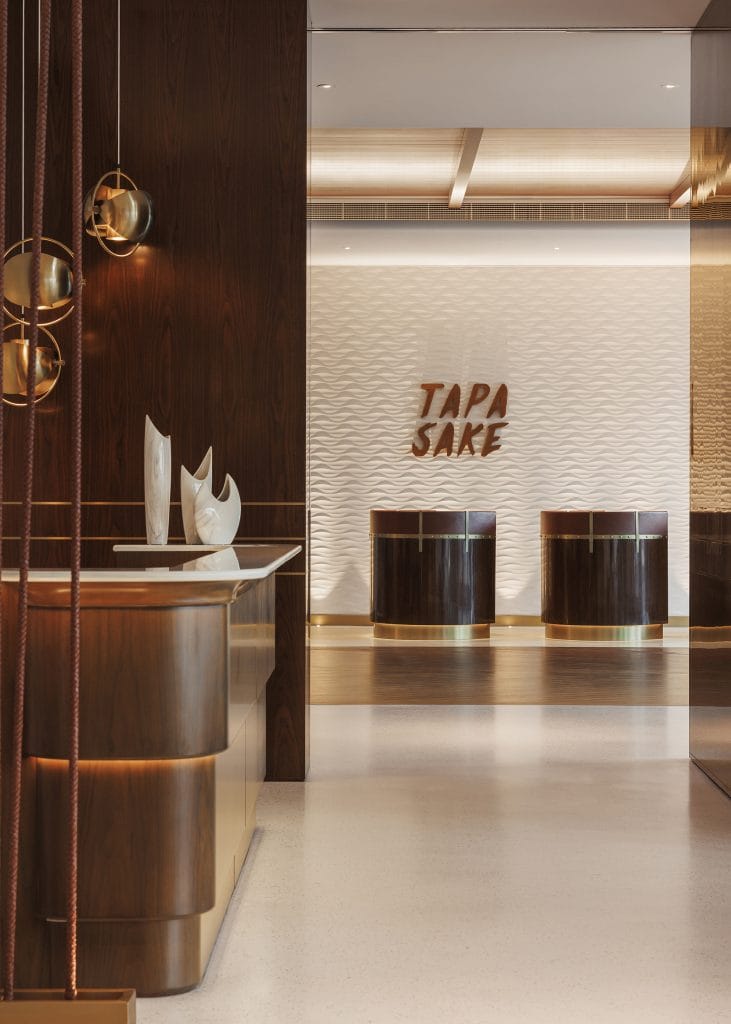
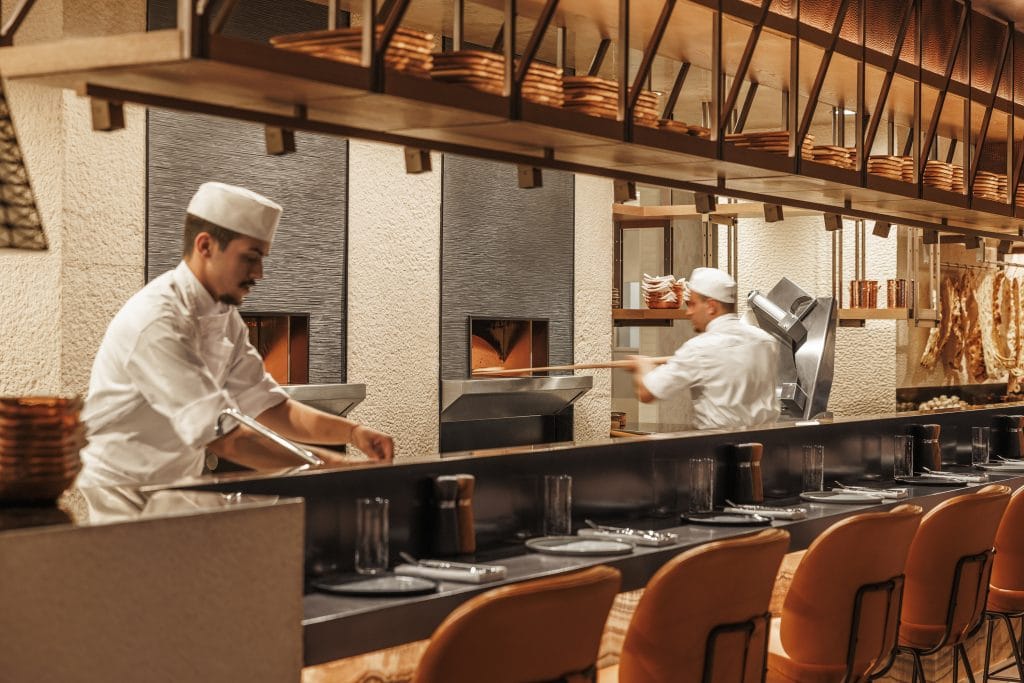
dpa were delighted to be commissioned to produce the lighting design for OKKU, an award-winning Japanese Restaurant, operating in Riyadh. The original and innovative space features two distinct floors where guests are greeted by Samurai warriors, a signature Jelly Fish Tank, a giant Japanese Bell and exquisite interior detailing to compliment the food and beverage.
dpa were very proud to work again with OKKU on another iconic restaurant and worked closely with the design team and client to bring out the richness and detail of the interiors with light, in a subtle and sympathetic manner.
Client: Whissle
Interior Designer: LW Design Group
Photography: Courtesy of OKKU
[pexyoutube pex_attr_src=”” pex_attr_width=””][/pexyoutube]


BYRD, the Club and Events venue connected to Hart Shoreditch Hotel London, Curio Collection by Hilton, recently opened with a stunning interior for which dpa have been fortunate to have designed the lighting, in collaboration with interior designers LXA.
The multi-purpose space works elegantly as a club and bar transforming the spaces with divisible walls to provide flexibility for various events and uses.
dpa developed a lighting design to facilitate the multi-functional use of the spaces using integrated and concealed lighting to bring the bar to life. Showcasing the interesting displays as well as accenting artwork and objects, the tables are also individually lit with portable LED table lights. A lighting control system works seamlessly in the background with both day and night scenes to provide appropriate ambiance according to the function and time of the day.
Client: Shamal and Seven Capital
Hotel Operator: Hilton Hotels & Resorts
Interior Designer: LXA
Contractor: Corley Woolley
Photography: Adam Letch


The concept was to create a space with multiple layers of decoration within this well-known London dining room dating back from 1873 and now Grade II* listed. The Clients had a clear vision to create visual interest at the lower levels, with just incidental light brushing on to the neo-Byzantine mosaic ceiling. Breaking the linear space up into a series of smaller areas each with their own character but aesthetically harmonious was also an important part of the brief using light.
The challenge of this project is its Grade II* listed status as no lights could be attached to the historic fabric. With our desire to create drama, together with the Client and Interior Designer we developed perimeter panels free of the historic fabric where lighting could be appropriately located, together with a variety of screens where again lighting elements could be seamlessly integrated. The artwork, displays and objects are authentic and the lighting is designed to show off these elements.
To provide great flexibility and minimise the quantity of cables, given the restricted routes in this historic building, we adopted a DALI protocol and then carefully balanced each element in each area to express the decoration in a theatrical manner while still having focus on the most important thing, the tables and the diners.
Client: MW Eat/Masala Zone Piccadilly Circus, Ranjit Mathrani, Namita Panjabi & Camellia Panjabi
Interior Designer: Design Wilkes – Jeffrey Wilkes
Architect: ARP Architects – Crispin Wright


dpa are proud to be the lighting designers for Cunard Line’s new ship, Queen Anne, which was delivered and set sail in May 2024. She features much-loved signature spaces and new experiences that showcase the classic Cunard style as well as exciting new design directions.
Cunard are well known for their exquisite food and beverage menus and experiences. Working closely with David Collins Studio, Richmond International and Sybille de Margerie, dpa developed lighting designs to elevate these experiences across all of the traditional signature venues open to all guests including: the Britannia Restaurant, the Chart Room, the Golden Lion pub; exclusive dining options the Britannia Club, Princess Grill and Queen’s Grill restaurants; and exciting new settings in Sir Samuel’s Steakhouse and Aji Wa.
Client: Carnival UK
Interior Designers: David Collins Studio, Richmond International, Sybille de Margerie, Adam D. Tihany
Shipyard: Fincantieri, Italy
Photography: Courtesy of Carnival UK and Cunard


-

- Interior of the Britannia Club restaurant on board Queen Anne in Italy. Evening. Client: Cunard. Picture date: Monday April 22, 2024. Photograph by Christopher Ison © 07544044177 [email protected] www.christopherison.com IMPORTANT NOTE REGARDING IMAGE LICENCING FOR THIS PHOTOGRAPH: This image is supplied to the client under the terms previously agree. No sales are permitted unless expressly agreed in writing by the photographer. Image licence is for below the line only. No out of home use without acquiring an extended image licence.
-

- Interior of the Britannia Club restaurant on board Queen Anne in Italy. Evening. Client: Cunard. Picture date: Monday April 22, 2024. Photograph by Christopher Ison © 07544044177 [email protected] www.christopherison.com IMPORTANT NOTE REGARDING IMAGE LICENCING FOR THIS PHOTOGRAPH: This image is supplied to the client under the terms previously agree. No sales are permitted unless expressly agreed in writing by the photographer. Image licence is for below the line only. No out of home use without acquiring an extended image licence.


-

- The Golden Lion Pub on board Queen Anne. Client: Cunard. Picture date: Wednesday May 1, 2024. Photograph by Christopher Ison © 07544044177 [email protected] www.christopherison.com IMPORTANT NOTE REGARDING IMAGE LICENCING FOR THIS PHOTOGRAPH: This image is supplied to the client under the terms previously agree. No sales are permitted unless expressly agreed in writing by the photographer. Image licence is for below the line only. No out of home use without acquiring an extended image licence.
-

- The Chart Room bar on board Queen Anne in Italy. Client: Cunard. Picture date: Monday April 22, 2024. Photograph by Christopher Ison © 07544044177 [email protected] www.christopherison.com IMPORTANT NOTE REGARDING IMAGE LICENCING FOR THIS PHOTOGRAPH: This image is supplied to the client under the terms previously agree. No sales are permitted unless expressly agreed in writing by the photographer. Image licence is for below the line only. No out of home use without acquiring an extended image licence.
Altogether, Arvia is the epitome of a sunshine resort sailing year-round to the warmest climates. The vast food and beverage selection onboard includes Epicurean, Sindhu, and The Glass House as well as P&O icons The Keel & Cow and The Olive Grove. The house lighting control is articulated to respond to the time of day and activity, ranging from energetic atmospheres to more refined, personalised and relaxed ambiances.
Client: P&O Cruises
Builder: Meyer Werft Shipyard, Papenburg, Germany
External Profile of Ship: Martin Francis of Francis Design
Architects/Design Team: Jestico + Whiles, Partner Ship Design and Richmond International
Photography: Courtesy of P&O Cruises


-

- London Architectural Photography
-

- London Architectural Photography
-

- London Architectural Photography


dpa lighting consultants are proud and privileged to have worked for P&O Cruises in association with Martin Francis of Francis Design, Jestico + Whiles, Partner Ship Design and Richmond International, to design the front of house and cabin lighting for this new 180,000-ton vessel, Britain’s most environmentally conscious cruise liner being powered by Liquefied Natural Gas (LNG), a clean burning fossil fuel that addresses new maritime rules on harmful emissions. Cruise ships of this scale are incredible feats of engineering and at 344 metres long, Iona is also Britain’s largest with a normal operating capacity of 5,200 guests and 1,800 crew, designed to capture unprecedented panoramic views across the ever-changing seascape, at every available opportunity.
Through close collaboration with the client and design team, the exterior and interior architectural lighting design has been developed and harmoniously integrated to enhance the quality of the guest experience. The ship accommodates a plethora of themed food and beverage spaces including P&O favourites such as The Keel & Cow and The Olive Grove, that provide the guest with a tremendous dining choice and varied ambiences catering for all. Many of these venues connect to the ship’s centrepiece, the Grand Atrium which spans port and starboard in cross section allowing a unique passenger connection to the sea through the vast glazed elevations
The lighting control is articulated to respond to the time of day and activity, ranging from energetic atmospheres to more refined and personalised ambiences.
Client: P&O Cruises
External Profile of Ship: Martin Francis of Francis Design
Architects/Design Team: Jestico + Whiles, Partner Ship Design and Richmond International
Photography: Courtesy of P&O Cruises


-

- Iona, P+O cruises, summer 2021
-

- Iona, P+O cruises, summer 2021
-

- Iona, P+O cruises, summer 2021
-

- Iona, P+O cruises, summer 2021
A Neo-Baroque concept decorated with warm reds, gold steel, and aubergine tones and colours. The latest destination from the world-famous Buddha-Bar stable, Barfly is a rich and exquisite explosion to the senses. Challenging the concepts of bar, dining, and entertainment, the concept by George V Eatertainment and detailing by Design Wapler & Associates set a high bar for the lighting design. We were tasked with creating and implementing a successful lighting strategy for all the front-of-house areas.
The venue is rich with material, objects of interest, and pockets of excitement coupled with sound and taste. The lighting design had to seamlessly fit in with the interior story without distracting from it, placing emphasis just where needed. Discreet luminaires allow as much integration into the fabric of the interior as possible, with judicial placing to highlight points of interest and promote contrast and shadow. Dimming and optic controls were significant in creating the required mood and atmosphere as the day and evening progress to the late hours.
Client: Hilton Hotels and Resorts / Barfly by Buddha-Bar
Interior Designer: George V Eatertainment and Design Wapler & Associates
Photography: North Digital


A rustic, charming newly opened restaurant on the Palm Jumeirah, Cucina is full of Italian flair and passion. The interiors are an eclectic blend of traditional and contemporary destination elements that create an approachable and vibrant atmosphere for guests.
The lighting design needed to be integral and sympathetic to the varied interiors while composing many points of focal interest to help create a memorable story.
Client: Golden Sands Hotels Co LLC
Operator / Brand Owner: Cucina
Interior Designer: KEANE
MEP Consultant: Arenco
Contractor: Marlin
Photography: Courtesy of Golden Sands Hotels Co LLC


KOYN restaurant in Mayfair, housed within the renovated building formerly occupied by the US Embassy and Canadian High Commission and set back within the Grosvenor Square development, has a striking first impression.
The food offering showcases a broad spectrum of Japanese cuisine with a stunning sushi bar at ground floor, and a Robata counter at lower ground providing the theatre of open fire cooking. The lower ground floor is also complemented with a private dining space and is connected to the upper floor by a striking staircase lit with concealed linear lighting to the steps and walls. The bar is nestled in the corner of the ground floor in dark and moody tones of wood and natural stones and lit to reveal the specialist drinks and objects on display.
The lighting provides a cohesive approach to exposing and expressing the interesting materials throughout the restaurant and bar. Always concealed, allowing only the materials and any decorations to be seen as well as, of course, the food to provide visual interest to each table and bar & counter throughout.
Client: LSL Capital
Interior Designer: Fabled Studio
Project Manager: Emmaus Consulting
M&E Consultant: Barlows MEP Services Ltd
Photography: James McDonald


We were delighted to have been involved in the first upmarket brand from the Irish pub group and in such a prestigious location. The interiors designed by Frank Ennis and Associates are industrial eclectic with a wide collection of nostalgia, decorative pieces, and varied materials. The large venue is also divided into different areas of experience to cater for a range of guests. Our brief was to work closely with the brand and designers to create a lighting scheme for all front-of-house areas and for all times of operation. The biggest challenge presented to us was the sheer number of visual elements, structures, materials, and textures on the walls and ceilings. Added to this were the performance areas with theatrical lighting, video displays, and high atmosphere. These had to be balanced, prioritised, and enhanced with a sympathetic and dynamic lighting strategy. Special care and attention were given to the selection of luminaires that were either rustic, theatrical or industrial in aesthetic to match the theme of the interior, all the while retaining good light performance. All the luminaires throughout the project are digitally controlled to allow us to set a variety of moods and atmospheres throughout the hours of operation and within the different areas of activity.
Client: Hilton Hotels and Resorts / Factory by McGettigan’s
Interior Designer: Frank Ennis & Associates
Photography: North Digital


The ship allows for completely distinct zones for different themes, moods and experiences. dpa worked in close collaboration with MSC and the extensive architectural design team across the plethora of venues, which includes 33 restaurants, speciality restaurants, bars and lounges, to sculpt a vibrant cosmopolitan environment for the varied guest experience.
Owner: MSC Cruises
Builder: Chantiers de l’Atlantique, Saint-Nazaire, France
Architects/Design Team: De Jorio Design International, AD Associates, SMC Design, YSA Design, Tillberg Design of Sweden, Studio Daz
Photography: Courtesy MSC Cruises, Photographer: Ivan Sarfatti


-

- MSC World Europa, Pizza & Burger


-

- MSC World Europa, MSC Signature Casino
The multi-award winning contemporary Japanese restaurant, bar & lounge is back in Dubai after closing its doors at the H Hotel in 2019. Now proudly residing in the Marriott Palm Jumeirah, the new incarnation of OKKU is still drawing on its vibrant and exciting guest experiences, live station, entertainment and beautifully rich interiors.
Having designed the lighting for the original OKKU Dubai 15 years ago, and OKKU Riyadh 5 years ago we were very familiar with the brand and its ethos of top-tier Japanese cuisine paired with a vibrant and exciting guest experience. The demand on the lighting had not diminished in this time, rather evolved and more importantly tested. Every aspect of the interior and guest journey is scrutinised to ensure it meets the brand’s vision, and the lighting was paramount to achieving this.
OKKU’s identifying elements remained: Samurai Warriors on guard, jellyfish, show kitchen, DJ station and large social bar. Private dining and live entertainment areas were also introduced. These are all striking visual focal points, each deserving a careful and effective realisation with light however, the overall composition of the entire space had to be planned and balanced to retain interest and a sense of journey to the guest without being overwhelming and too ‘noisy’.
Client: Golden Sands Hotels Co LLC
Operator / Brand Owner: Whissle
Interior Designer: LW Design Group
MEP Consultant: Arenco
Contractor: Marlin
Photography: Courtesy of Golden Sands Hotels Co LLC


We have a long standing relationship with the Waldorf Hotel Amsterdam and their Owners so were very happy to be asked to work with David Clixby of GA Design on the lighting for Spectrum, a signature restaurant within the property. The understated elegance of the dining space provides the perfect backdrop for the incredible two Michelin star food led by Chef Sidney Schutte and Restaurant Manager Cas Kratz. The restaurant is punctuated with powerful art and flower displays all appropriately illuminated to add drama to the space, while the focus remains on the tables.
Owner: DvM b.v.
Operator: Sidney Schutte
Architect: OeverZaaijer
Interior Design: GA Design
Photography: Joseph Briare; Underpromise Agency – Mart Goossens and Alexander Sporre


Michelin star chef Yannick Alléno has brought his modern French Pavyllon restaurant to London’s prestigious Four Seasons Park Lane Hotel. dpa had the pleasure of collaborating with interior designer Chahan Minassian to create a modern and sophisticated lighting scheme for the restaurant, private dining areas, bar and terrace. The tea lounge has additionally been refurbished to match the décor of the restaurant with modernisation of the existing lighting.
dpa’s approach was to bring a subtle and seamless integration of lighting to elevate the dining experience whilst revealing the luxurious fabrics and materials of the beautiful interior design. With the restaurant service running from morning until late into the evening, a combination of precise lighting controls and employment of tuneable white luminaires allowed the perfect scene to be set. A fresh and comfortable breakfast scene balances the natural light of the morning, shifting to a warmer and elegant setting for afternoon tea or lunch and ending with a sophisticated, intimate dinner and drinks scene.
The sumptuous, curved dining counter and theatrical show kitchen is at heart of the restaurant, with intricate and layered lighting details accentuating the hood and counter. Bar Antoine is centred around an elaborate Murano glass chandelier and undulating dark timber walls with stone artworks illuminated from above and below for a dramatic backdrop to the seating area and spiral staircase.
The existing lighting in the tea lounge has been replaced with modern LED luminaires including tuneable white linear LED to the double height feature coffers and coves, which shift to warmer colour temperatures throughout the day and are in keeping with the ambience of the restaurant.
Please visit www.pavyllonlondon.com to find out more about this project.
Hotel Operator: Four Seasons Hotels and Resorts
Interior Designer: Chahan Interior Design
Architect: Cornforth Architecture + Design
Photography: Courtesy of Four Seasons Hotel London at Park Lane and Pavyllon London


CLAW BBQ Hilton Dubai Palm is the latest venue for the well-known crabshack and dive bar. Vibrant atmosphere meets American vibe, the lighting design and implementation played a key role in helping to bring the restaurant to life.
Client: Hilton Hotels and Resorts / Claw BBQ
Interior Designer: Prospect Design International
Photography: North Digital


dpa have been working closely with Camellia Panjabi, Namita Panjabi, and Ranjit Mathrani of MW Eat for 19 years, designing the lighting for their three fine dining restaurants and the various Masala Zones throughout Central London. Each restaurant is individual and makes dining a special occasion with truly authentic Indian food that is simply exceptional, coupled with outstanding service and magical interiors that further enhance the whole experience. Established in 1926, the fine dining restaurant Veeraswamy is the UK’s oldest Indian restaurant. It was recently refurbished, with the lighting playing an important part in representing the spaces. dpa worked closely with the owners and interior designer Jeffrey Wilkes in the development of the lighting design.
The lighting creates drama from the tables, to the exquisite display case full of brightly coloured turbans and glassware at the entrance, and on to other art and sculpture. A combination of decorative lighting elements and carefully integrated architectural lighting provides decoration and ambiance to the dining rooms. The dining space is split into three distinct areas, all with their own look and feel. The lighting is carefully scene-set through a dimming system to create exactly the right mood for lunch, early evening and throughout the night.
Owner: MW Eat – Camellia Panjabi, Namita Panjabi and Ranjit Mathrani
Interior Designer: Jeffrey Wilkes, DESIGNWILKES
Photography: Courtesy of MW Eat


dpa were thrilled to be commissioned by Corinthia London to develop the lighting scheme alongside renowned Interior Designers, David Collins Studio for the new Velvet Bar at the Corinthia.
Velvet takes the place of Corinthia’s former bar “Bassoon”, which has been completely reimagined by David Collins Studio. The transformation sees furniture re-upholstered, rich velvet drapery introduced, and new artwork by Robson Stannard throughout; dpa worked closely with both the Hotel and David Collins Studio to highlight these new features appropriately. All lighting has been re-lamped, with beam angles carefully considered, re-aimed, and scene-set to create focus and drama throughout the bar. The introduction of additional theatre-style Par Can lights to a new stage area, backed by the deep red velvet drapery, creates a new focus to Velvet, transporting guests back to the roaring twenties, an era where opulence, indulgence, and celebration took centre stage. The lighting levels were carefully considered to provide a seductive, intimate atmosphere that complements the magic and theatre of the acclaimed bartender and mixologist Salvatore Calabrese’s innovative twist on classic cocktails. It has already been claimed that this will be one of London’s most desirable cocktail destinations.
To find out about the inspiration behind Robson Stannard’s artwork featured at Velvet at The Corinthia, click here
Client: Corinthia Hotel
Interior Designer: David Collins Studio
Photographer: Alex Upton Photography


dpa lighting consultants have been fortunate to work with Quadrant Design and Georgina Brennan Interior Design on the lighting design to the Coppa Club, Maidenhead. Our approach to the Lighting Design was to work with both client/operations teams, and the design team to ensure that the appropriate ambience and accent was achieved with lighting to enhance the interior and exterior spaces. Our lighting design included a sympathetic approach to the architectural lighting, with concealed lighting where possible to expose interesting interior features with minimal down lighting so that the overall ambience is created with decorative features and elements. Lighting control was extremely significant for all areas to balance natural light during the day, both when bright and overcast, but more importantly at night when more intimate scenes were created for early and late evening. Finally, the overall brief and vision of a warm jewel of interior spaces was successfully achieved especially when viewed from the Berkshire Cut River.
Client: Strada
Interior Designer: Quadrant Design
Project Manager: Simon Bristow Associates


dpa lighting consultants were delighted to be asked to work in collaboration with GA Design, Marriott Hotels and Mori Trust on the first international luxury hotel in Nara, Japan. The new JW Marriott is located a short distance from the Nara Park and ancient temples which provided inspiration for the project. The simplicity of heavy timber beams and stone from the temples and local homes have been reinterpreted by Joanna Biggs, lead Interior Designer for this hotel together with references to the local landscape and culture.
The guests receive a warm welcome with the feeling of a luxury residential home due to the natural interior finishes and warm coloured lamps. The connection with nature is immediate in the lobby such as the panoramic view of mountains surrounding Nara, drawn on the wall behind the reception. The lighting is irradiating to this artwork by colour temperature changing lamps which are programmed to synchronize with the daylight outside.
Client: Mori Trust
Hotel Operator: Marriott Hotels and Resorts
Interior Designer: GA Design
Photography: Courtesy of JW Marriott Hotel Nara, Japan


Mandarin Oriental Jumeira, Dubai is a newly constructed 5-star resort-style hotel located on Dubai’s Arabian Gulf shoreline.
Over a period of 4 years, dpa worked in close collaboration with the Client, Operator and Design Team WASL Group, Mandarin Oriental Hotel Group, Architects DAR and Interior Designers Design Wilkes and Silverfox to design the lighting solutions for all public FoH areas of the Hotel, internally and externally.
Interior Design for the Guestrooms, Public Areas and Ballroom facilities was undertaken by Design Wilkes. Silverfox Studios provided the Interior Design for the Spa and Fitness Centre and the Speciality Restaurants, The Bay, Tasca, and Netsu. Landscape design was courtesy of 40North and Cracknells.
As part of the design brief dpa worked closely with all parties from initial conception stage, ensuring that the lighting design was cohesive throughout the hotel, and well integrated within the Interior Design and Architecture.
dpa followed the project through to the construction stages, maintaining a regular presence on site to ensure the designs were fully understood and coordinated with the various contractors, suppliers, consultants, and site teams.
While all spaces are special in their own way, the most impactful moments within the Hotel occur in the Main Lobby and within Netsu Restaurant.
The Main Lobby is very important, forming the first impression of the Hotel for arriving guests and visitors. At 12 metres tall, it provided a challenge to ensure that the lighting was sufficient to adequately illuminate the space during daylight hours, with the dimming range to provide subtlety and ambience after dark. A discreet, linear, ceiling recessed system was designed and specified, allowing high output linear LED luminaires to be installed in a way which matched the rhythm of the architecture and the ceiling.
At ground level, there is a colonnade of 14 Light Trees, designed by Design Wilkes and Preciosa, with technical and aesthetic input from dpa. The Trees feature approximately 900 individually addressed LED light points, illuminating hand blown glass leaves. The leaves are programmed to produce dynamic ripples of light, individually varying their brightness to create differing effects. The arrangement of the colonnades leads the eye along the central water feature, and through to the landscaped, beach adjacent courtyard and lap pool.
Within Netsu, a signature restaurant on the ground level, Silverfox Studios produced an industrial aesthetic, with a combination of rugged and natural materials. The brief was to create a theatrical dining experience, to use the central open Robata kitchen as a ‘stage’.
In response to this, dpa implemented a series of suspended lighting truss rigs, upon which were mounted theatrical RGBW projectors, with variable beam angles and focussing. These projectors were used to provide warm white intensity at the points where food is displayed and served, and dramatic coloured accents around the space. RGBW linear floodlights were mounted on top of the rigs to provide a coloured wash of light to the MEP service at high level, accentuating the height and industrial aesthetic of the space.
Owner: WASL Group
Operator: Mandarin Oriental Hotel Group
Project Manager: DAR
Architect: DAR
Interior Designer for Public Areas: Design Wilkes
Interior Designer for Spa and Restaurants: Silverfox Studios
Interior Design Co-ordinators: PMQ
Landscape Consultants: 40North and Cracknells
MEP Consultant: SEED Engineering
Photography: Alex Jeffries Photography Group
dpa Project Team: David McNeil, Douglas Brennan and Tim Leeding


The Hilton Hotel in the heart of Cologne City has undergone a dramatic and creative renovation to its reception lobby and ground floor areas with the addition of the Pigeon Post Bar & Eatery. General Manager, Martin Soerensen played a significant role in driving the project from site during the recent difficult times along with Project Managers Chandler KBS and the Hilton Interior Design team.
The new spaces are connected as a culinary social hub as open and semi-open spaces visually connecting with each other.
The interiors of the restored heritage building have been designed by the creative London-based Interior designers THDP. The site was once home to Cologne’s postal savings bank, so a sophisticated and slick vintage design ethos was created by THDP, with a contemporary interior featuring interesting and quirky design elements moulded into the fabric of the spaces.
The reception and feature bar are at the heart of each space and provided excellent opportunity for interesting lighting integrated to enhance the interior elements and surrounding space. Decorative lighting elements help further to provide accent and interest throughout.
Finally, and importantly, an architectural lighting control system was used to provide the various important transitions to the mood and ambience of the spaces creating bright and inviting spaces during the day and moody, cosy spaces at night.
Client/Operator: Hilton International
Interior Designer: THDP
Project Manager: Chandler KBS
Photographer: Stefan Bunkofer


On 3rd February 2017, Hennes & Mauritz (H&M) launched their brand new Flagship store in Barcelona, Spain, which is situated on Passeig de Gràcia, one of the major avenues in Barcelona and one of its most important shopping and business areas, containing several of the city’s most celebrated pieces of architecture.
dpa undertook the lighting design of the historical lobby and the newly introduced Flax & Kale café within the heritage spaces of this 1950’s property, a former HQ for insurance company Banco Vitalicio de España.
The lighting scheme for the historic lobby features decorative custom pendant luminaires with dedicated, directional lighting to the merchandise displays. At the same time, finely integrated linear lighting solutions accentuate the important architectural features within the space while respecting the building’s heritage.
The Flax & Kale café represents an innovative new concept and experience for H&M. The lighting provides a clean, airy yet warm space that complements the interior architecture and distinguishes itself from the adjacent retail areas. At the same time, the design seamlessly combines the bright and fun character of H&M with the warmth and design lines of the Flax & Kale tradition.
The lighting installation is fully reversible with minimal disturbance to the historic building fabric while achieving a theatrical lit result for customers to enjoy.
Client: Hennes & Mauritz (H&M)
Café Operator: Flax & Kale, Barcelona
Flax & Kale Interior Designer: Estudi Francesc Pons, Barcelona
Photography: dpa lighting consultants


The Juliet Rose Bar at the Hilton Munich City has the Rose at the heart of its theme, side by side with the botanics of the beverage and food menus. There is a spirit of alchemy in the interior both for the design and purpose, with the large bar being the focus of the space where the theatre of signature cocktails are accented with perfectly placed and coordinated light to create drama and focus. The interior adapts through the day from morning to late into the evening with a warm and inviting atmosphere, created with very warm lighting elements and lamps which are dimmed low at night to create the desired and appropriate ambiance.
The interiors have been designed by London-based Interior Designers Goddard Littlefair with dpa working closely with them on all aspects of the lighting. Each lighting element was carefully considered and placed to enhance the space and provide the appropriate atmosphere.
Operator: Hilton Hotels & Resorts and Juliet Rose Bar
Interior Designer: Goddard Littlefair
Photography: Fanning Tseng – Yes! Please Enjoy Photography


We were delighted to be commissioned by Corinthia London to work with David Collins Studio on the new Kerridge’s Bar & Grill at the Corinthia, which has already received fabulous reviews and is clearly one of the most important restaurant openings in London this year.
David Collins Studio worked closely with Tom Kerridge to transform the space into a sumptuous and atmospheric dining room and bar that was in keeping with the whole ethos of Britishness that Tom wanted for his first restaurant in London.
dpa worked very closely with Simon Rawlings and the team at David Collins Studio from the concept to the final setup, crafting the lighting design. Painting the ceiling dark green and removing the huge chandeliers that were in the space was carefully considered to change the emphasis of the room, bringing all the life, decoration and sparkle down to the lower human levels of both the dining room and bar area. Additional layers have been added with art including two large bronze sculptures by Beth Cullen-Kerridge and three pieces by Robi Walters, as well as the introduction of illuminated gantries over the bar and rotisserie areas.
Each table, the artwork, and bar are lit by a series of narrow beam spotlights above apertures in each ceiling bay. At low level there are various decorative lighting elements and integrated architectural lighting throughout the spaces. Each component is separately controlled and dimmed to create the perfect balance visually in the space day and night. As with many of our projects candles are as important, if not more important than all the other lighting elements providing that soft dancing light across the tables and brushing people’s faces with a warm glow. The whole space has a beautiful softness and warmth both during the day and at night.
Client: Corinthia London
Interior Design: David Collins Studio
Artwork: Beth Cullen-Kerridge and Robi Walters
Photography: Cristian Barnett and Kensington Leverne


Located on the 2nd Floor of the Nassima Royal Hotel in Dubai DIFC, Trèsind is well known for its Indian molecular gastronomy. Following the recent renovation, the restaurant is returning with 2 new dining concepts.
In the dining experience, one has the comfort of dining with the signature dishes along with new explorations in the Modernist Indian Cuisine, paired with some of the most unique concepts in mixology. Trèsind Studio is an immersive intimate affair, guided as a chef’s table experience.
In the main dining area. the walls and feature wall frames are finished in dark blue whilst the entire ceiling is covered in blue and white wallpaper. Long tables placed centrally in the space act as serving stations and carry jars of spices, frequently used in Indian cuisine, that add colour and texture. Narrow beam spotlights provide a sense of theatre as the staff moves around these tables while serving the guests.
The dining tables are located in pockets around the perimeter of the space in pairs providing a sense of privacy. Integrated linear lighting grazes the louvered panels that cover the windows from behind, providing a sense of depth. The frames on the walls on either side of the tables are highlighted by picture lights, while the tables are softly accentuated.
A similar approach has been applied in the Studio. Here, the focal point is the preparation counter. The lighting levels are generally lower due to the lighter finishes on the walls and ceiling, and to promote the 180o views out to the city.
Project Credits:
Client: Passion F&B Management Consultancies
Interior Designer: Modo Milano
MEP Consultant: Akins


MW Eat own and operate three fine dining restaurants and several Masala Zone establishments across London, providing sophisticated informal dining with authentic Indian cuisine. dpa has been working closely with MW Eat for the last 15 years, not only are they passionate about authentic food but the group’s passion extends to all aspects of their restaurants, which is what makes them so special.
Featured here are images of Masala Zone Covent Garden with the incredibly colourful Rajasthan puppets dramatically uplit, the vibrant bar with carefully integrated layers of light, and focused pools of light on each table exposing the visual delights of the food as it is served. The eclectic decorative chandeliers, small pendants and wall lights add important layers of decorative illumination to the various spaces, and sophistication to the visual experience.
The lighting is grouped with many layers individually controlled to create the perfect balance of drama and warmth throughout the day and into the evening. The lighting changes automatically and with unperceivable fades from one scene to another.
Owner: MW Eat – Namita Panjabi, Camellia Panjabi and Ranjit Mathrani
Interior Designer: Design Wilkes
Architect: Anthony Richardson & Partners
Photography: Courtesy of MW Eat


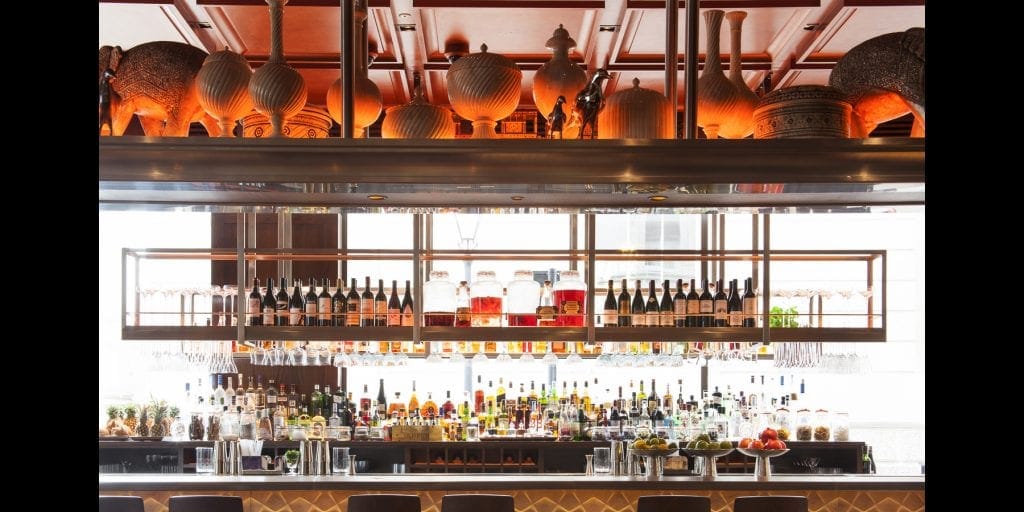
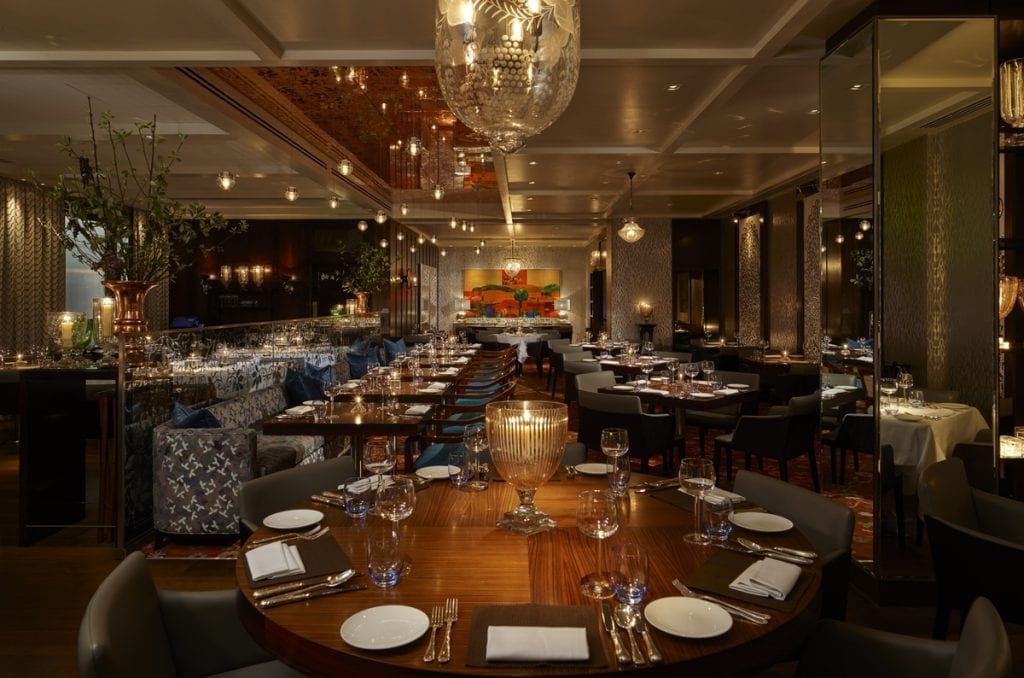
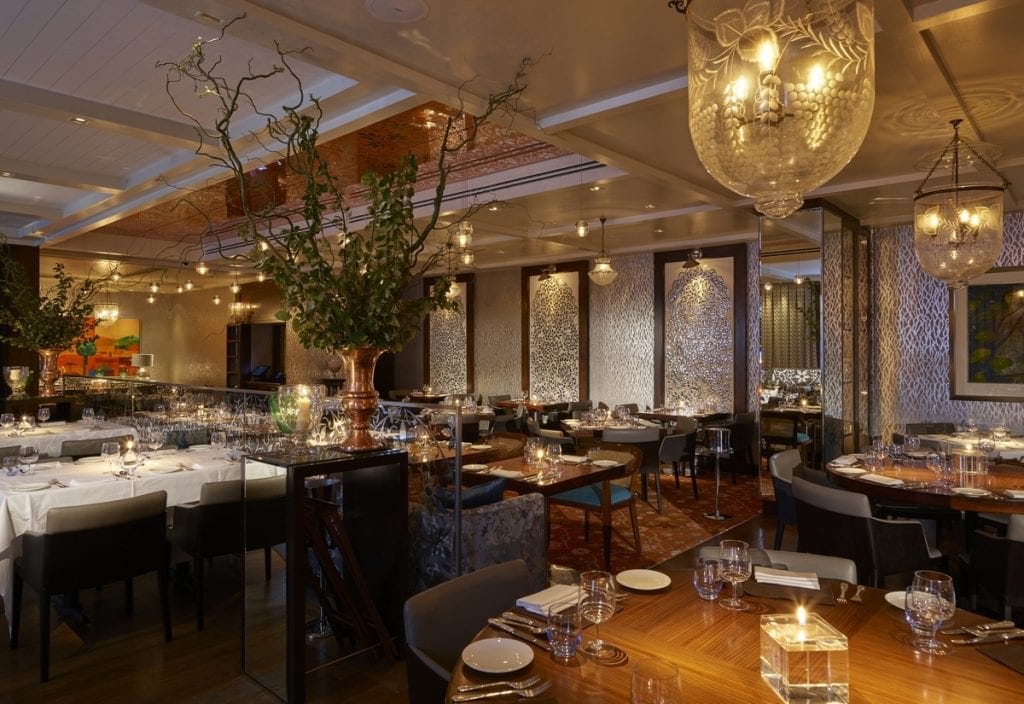
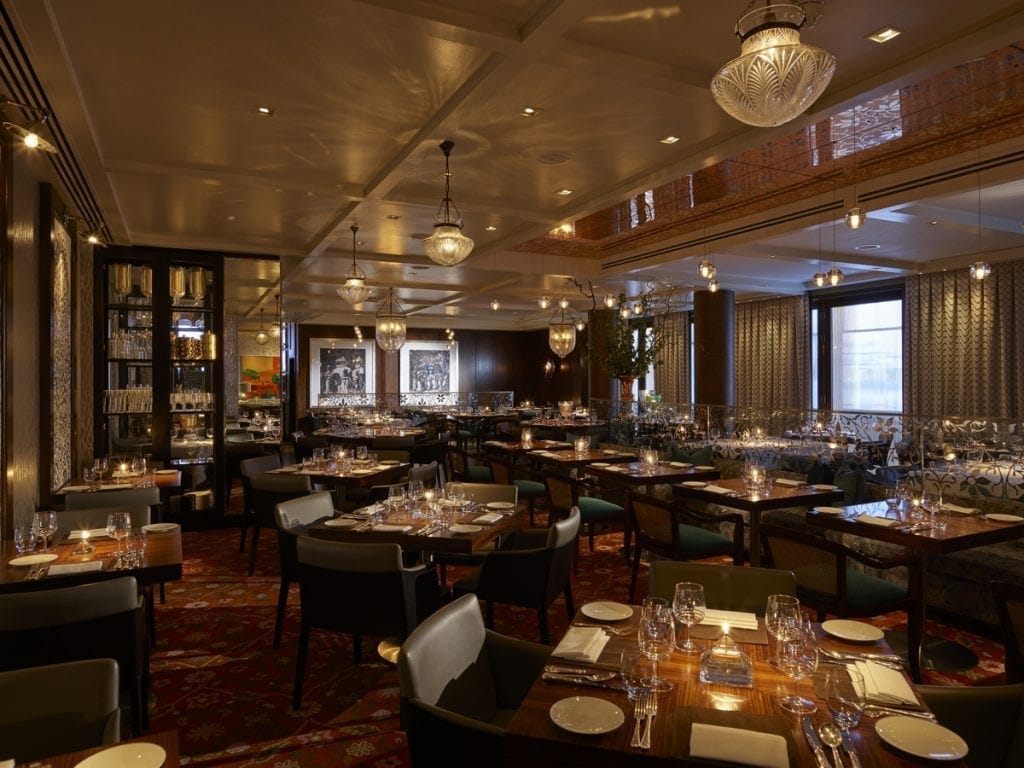
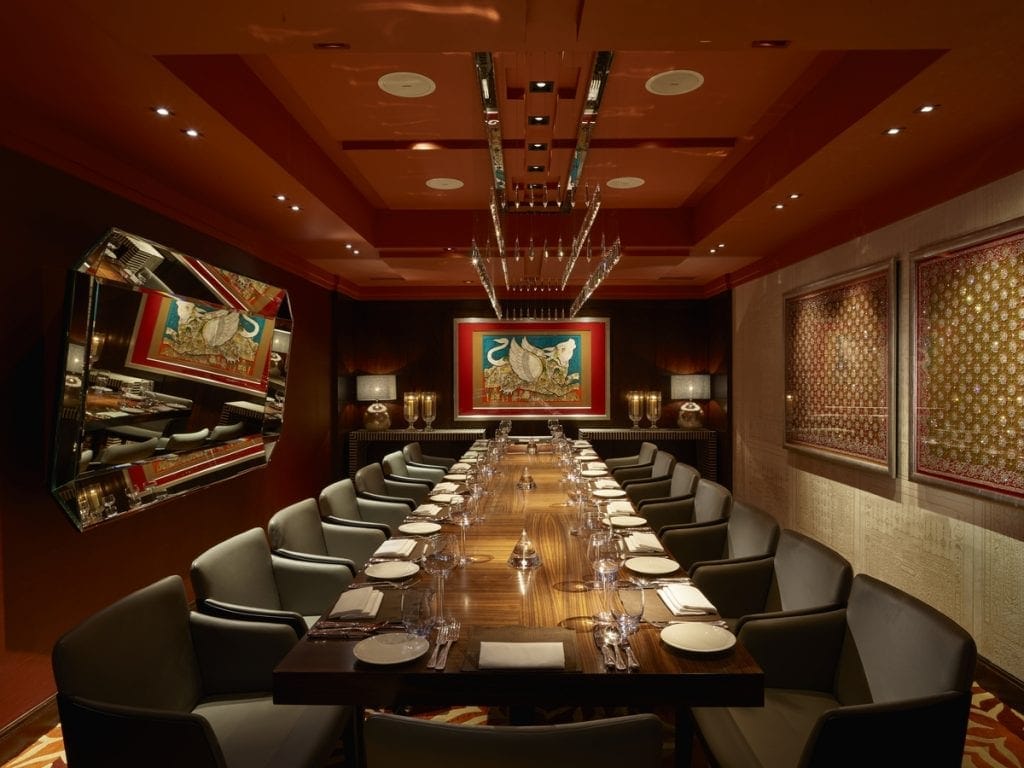
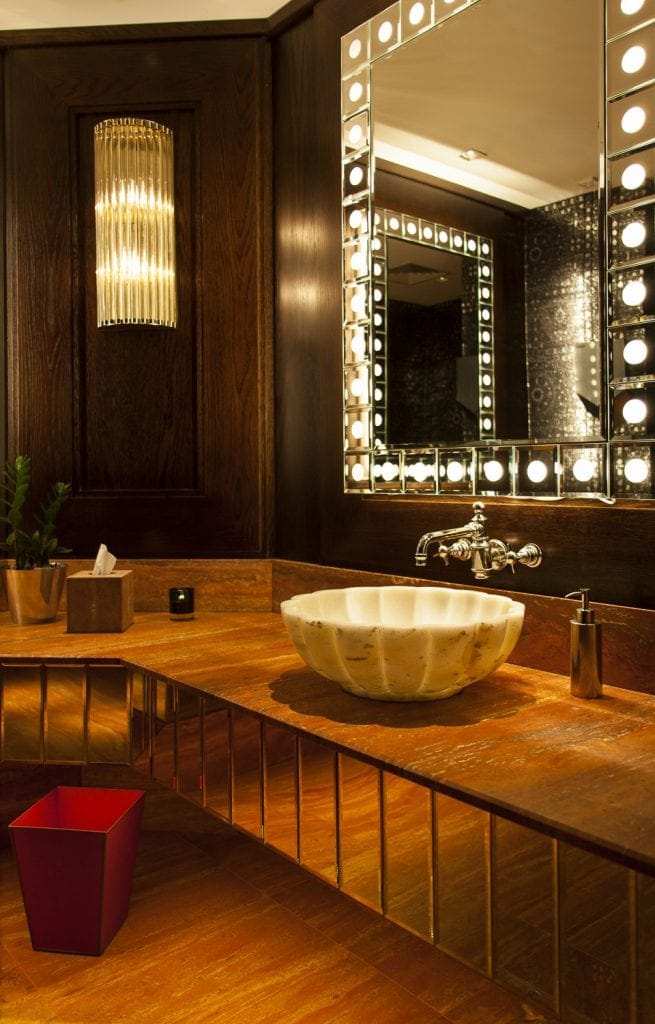
Established in 1990, Chutney Mary pioneered the concept of contemporary Indian dining in London. Newly relocated to the heart of the West End, the refurbishment of 73 St James’s by MW Eat was a carefully orchestrated project that drew upon 25 years of experience, delivering quintessential Indian cuisine from fine dining to informal. The interior design by DESIGNWILKES brings together an exotic champagne and cocktail bar, glamorous restaurant, and two private dining rooms.
The brief was to provide the highest quality of light in a way that provided drama and contrast across a range of different materials and finishes. In addition, the qualities of ambience, warmth, and high quality smooth dimming to a very low level were paramount. To achieve all the necessary lighting characteristics, a combination of low voltage halogen and LED light sources were utilised in a variety of lighting layers and integrated lighting details. With the LED light sources, it was critical to use the best possible dimmable drivers to achieve the optimum low-end dimming for these sources. Decorative luminaires in the form of pendants and wall lights contributed to a strong interior aesthetic, and the overall visual quality was further enhanced with many candles which were used throughout the restaurant, to give a warm, romantic additional layer of low level ambient lighting.
All the lighting was controlled through a programmable dimming system with a variety of lighting scenes set up for different times of day and special events. One of the many challenges faced was balancing these scenes against the changing seasonal natural daylight, in particular for the front bar area. Much time was spent getting the best optimum balance of lighting to present the restaurant in the best possible light!
Owner: MW Eat – Namita Panjabi, Camellia Panjabi and Ranjit Mathrani
Interior Designer: Design Wilkes
Architect: Anthony Richardson & Partners
Finz at the Beach Rotana Abu Dhabi is a recent refurbishment of an old favourite fish restaurant in the Capital City. Offering inventive and exquisite dining in a chic, modern setting with romantic views across the water, Finz is a firm destination for those wanting a rich and enjoyable evening experience.
The main structure of the restaurant was retained during the refurbishment, but the feel and movement of the space was redesigned. The brief for the lighting design was to lift what was previously a dark interior and help reinforce the new modern and open voluminous space. A desire was expressed by both the hotel operator and interior designers to keep the ceiling free form clutter, and any lighting equipment introduced had to be minimal and discreet. The challenge for the lighting was therefore threefold: provide functional lighting for the day and evening, create a warm, inviting focus-driven lighting scheme, and to be as simple and elegant as possible. In addition, emphasis had to be given to the show kitchen and DJ station while keeping an overall balance and harmony.
To provide a sense of space and volume to the interior, linear LED profiles were routed into the existing roof supporting structures gently washing the ceiling in warm white light. All of the profiles and wiring were completely concealed from view. Very discreet, elegant, colour-matched, suspended spotlights were introduced in key areas to accent light the tables and provide a low circulation level of light. Additionally, supplementary colour-matched surface mounted spotlights were located in the beams for highlighting to artwork and features. Display, shelf and wine lighting were carefully integrated to be completely concealed and to provide lighting just where it was required.
On the exterior terrace, the lighting was kept deliberately to a minimum to preserve the views out across the water. Candles are predominantly used on the tables, with miniature brass spotlights tucked up in the overhang to raise the light level if required. The surrounding glass balustrade has a custom concealed LED edge lighting detail to provide a soft boundary to the terrace.
Because of the nature of the project and the number of different lighting techniques, product and lamp selection was very important to ensure a colour consistency across the spaces, and also to ensure the best dimming compatibility with the lighting control system.
Client and Operator: Rotana
Project Manager: Beach Rotana
Interior Designer: LW Design Group


Ramusake at the Hilton Doubletree is the first appearance of the exciting London brand in Dubai, courtesy of the Mahiki Group. Situated at a prime location in Jumeirah Beach Residence, Dubai Marina, the restaurant’s expansive terrace, offers incredible views over the Bluewater Island Development and the soon-to-be-completed observation wheel, the Ain Dubai.
Offering a specialised menu of Japanese classics with a refreshingly modern twist, the restaurant captures the ‘Isakaya” dining concept perfectly. Taking inspiration from Shōwa era, (1920’s) Tokyo, the venue’s interior design and lighting serve to accentuate and reinforce the food offering creating an encompassing, authentic dining experience.
The restaurant feels very elemental. Fire, steam, smoke, and spectacle is provided by the centrepiece Robata Grille. Ice, within the large fresh fish displays, Water in the views of the Arabian Gulf, and Air, through the entirely retractable glass façade. These elements combine with the material and finishes palette, aged concrete, charred timber, and hand-painted Japanese artworks, to transport the guest to another location and time.
From conception to final site stages, dpa lighting consultants provided creative and technical guidance throughout. The original concept brief was to create an intimate, dramatic lit environment, incorporating authentic Japanese elements through the use of traditional “Chouchin” and “Tsuri Dourou” lamps. Collaborating closely with the Interior Designer, concepts were also developed for an impressive, oversized abacus suspended at high level above the main dining space.
Working within the existing site conditions, and in collaboration with the Interior Designer, dpa implemented a strategy to provide spotlighting highlights to the dining tables and artworks, with lit emphasis and focus provided at the open show kitchen and the main Sake bar. A combination of high-level, mid-level and low-level lighting techniques were used, building up layers of accentuation to create a balanced lit environment. Ambient light levels were kept very low, to enhance the intimacy and theatre of the space. Through the specification of discreet equipment and integrated detailing, the lit effect takes centre stage, rather than the lighting equipment.
At the terrace, accentuation was sparingly provided to the central feature tree, surrounding planting dividers and artworks, ensuring that the main focus is reserved for the spectacular views out.
Overall, the Lighting Design, Interior Design and restaurant concept have combined very cohesively to create a successful and popular finished project, which stays true to the design aspirations set out within the original concept.


Owner / Operator: Mahiki Group, London
Interior Designer: MY Studio, Dubai
M&E Consultant: Sunstar Technical Services LLC, Dubai
Project Manager: Studio International Engineering Consultants, Dubai
Photography: Taken by dpa lighting consultants FZ LLC with the kind permission of Ramusake
In the heart of Dubai’s Business Bay district, close to the Burj Khalifa and The Dubai Mall, the newly opened 5-star Steigenberger Hotel Business Bay Dubai meets the demands of both leisure and business travellers. This cosmopolitan hotel with a German touch is the first property from the brand in the GCC region, featuring elegant and stylish designs combined with German precision and efficiency.


dpa lighting consultants provided the lighting design for all of the internal public & guest areas, working closely with the Interior Designers at LW Design Group on the entrance lobby, reception, lobby lounge, meeting rooms, ballroom, fitness suite and Spa. Together with guestrooms and suites which enjoy stunning views over the bay, the interior design and lighting design worked hand in hand for the restaurants, bars and cafés.
The lighting design brings together and showcases the stylish palette of materials and finishes, whilst providing a sense of space and continuity through the connecting areas. The overriding design approach to the lighting was to limit the down lighting and play to the architectural features of the spaces by integrating lighting into key interior and architectural detailing and concealing the light equipment as much as possible.
Functionality of the lighting is also key, with all areas designed with energy efficient light sources in maintainable locations and controlled by intelligent lighting control systems to change the emphasis and atmosphere at different times of the day.
Client: Abdulsalam Al Rafi Group
Operator: Steigenberger Hotels
Project Manager: ArchGroup
Interior Designer: LW Design Group
M&E Consultant: Al Tayer
Located at the World Trade Centre Abu Dhabi, Tamba is a brand new Indian inspired dining experience with a contemporary twist. The owners Purple Honey, together with interior designers LW Group, have created a unique and stylish experience within the loft-style setting. An abundance of decorative handmade lighting pendants and oversize bells form the spectacle of the interior, with individual spaces designed to cater for the casual to the intimate. The rich and intricate theme of the interior flows onto the terrace where diners can enjoy the views of the Capital City in a sensual environment.
dpa had the pleasure of being invited to join the design team and work closely with the Client and Interior Designers to develop a lighting scheme that would reinforce identity and help bring an emotive quality to the establishment.
Many important considerations needed to be addressed while designing the lighting, in particular the daytime and evening operating hours. With the amount of daylight entering the space, the feel of the restaurant dramatically changes throughout the day into late evening. Therefore, the lighting needed to address this balance while retaining the focus on areas of interest and excitement; this was achieved by layering the lighting so that different elements could come into play as the natural daylight dissipated. Concealed LED was used predominantly throughout to provide accent to the decorative screens, niches, and artwork. Tungsten Halogen was decided for soft illumination of the dining tables because of the warm colour, dimming and most importantly to show case the exquisite food. A touch of theatre is introduced to the terrace with strategically placed gobo pattern projectors, to complement the surroundings, and generous use of natural candle light.
All of the lighting is operated by a control system to allow the necessary scenes and seamless transition through the day and night.
Client and Operator: Purple Honey
Project Manager: Al Fara’a Interiors
Interior Designer: LW Design Group


Yosma is a recently opened Turkish Meyhane, Mangal & Raki Bar in Baker Street, London. Designed by Afroditi Krassa Studio Yosma is the concept of Levent Buyukugur and Sanjay Nandi of the Good Food Society and Executive Chef Hus Vedat.
Inspired by the streets of Istanbul, Afroditi Krassa’s design has injected heart and soul into every corner of the Bar/Restaurant providing opportunity for the lighting design to enhance and accent the interiors while creating a comfortable and honest ambience with theatre from the chefs ‘on stage’ to the rear of the restaurant.
Photography courtesy of Yosma


Estiatorio Milos Restaurant London is the 6th restaurant from the acclaimed chef Costas Spiliadis who’s attention to every detail of his restaurant was the starting point for the lighting design of the restaurant.
The primary importance for the lighting was to light the food well and not compromise on fashion or gimmick for decoration as the food at the market and table was to be the focus. The interior did however have to provide visual comfort and harmony with the Crown Estate listed building ‘envelope’ which offered opportunities to enhance from the external gated entrance to the double height space of the main restaurant space (Images 1 & 2).
Working with Canadian Architect Alain Carle who designed the elegantly refined interior spaces as backdrops to the ‘theatre’ of the restaurant. The lighting played an essential part in bringing the spaces to life with theatrical lighting accent to the food and tables, bars and displays which reinforce the visual focus and interest.
The Studio Pendant Orb from Neidhardt is a striking feature connecting the ground floor to the mezzanine and inspired as glowing jellyfish floating within the restaurant. Carefully and discreetly integrated within the ceiling details is recessed track lighting aimed through and down to the tables below. (Images 1 & 2).
Client: Costas Spiliadis
Operator: Estiatorio Milos
Project Manager: Keytask Management Ltd
Architect and Interior Designer: Alain Carle Architecte
Base Build: JM Architects
M&E Consultant: TEI Electrical Contractors
Photography: courtesy of James Newton


Fronting the Atlantic Ocean, the new intimately scaled Four Seasons Casablanca offers a resort style hotel, blending textured sand-coloured contemporary architecture with a modern Moroccan interior. dpa worked closely with GA Design International, London to design the main public areas including the ‘Mint’ tea lounge and EDG Design, California for the design of the ‘Bleu’ speciality restaurant and ‘Altitude 33’ pool bar.
Overlooking the oceanfront on the prestigious corniche, the hotel is part of the Anfa Place development, being the first master-planned construction on the White City’s shore. The guest experience is set off on arrival at the inspiring and sensational Porte Cochere, which consists of 1225 Moroccan shaped pots, each individually lit. The understated and discreet entrance then gives way to a majestic mix of interior spaces with a building geometry that is based around the linear courtyard and gardens.
Owner: Inveravante
Operator: Four Seasons Hotels & Resorts
Project Manager: MACE
Master Planning Architect of Anfa Place: Foster + Partners
Local Architect: Sens Archi
Landscape Architect: Arge
Interior Designer: GA Design (main Public Areas including the ‘Mint’ Tea Lounge) and EDG Design (‘Bleu’ Speciality Restaurant and ‘Altitude 33’ Pool Bar)
Electrical Contractor: Elecnor
Photography: Courtesy of Four Seasons Hotels & Resorts


The Four Seasons Hotel Gresham Palace Budapest is a historical landmark that combines the luxurious comforts of the 21st century with the elegance of the past, it is considered by many to be the best hotel in Hungary. The Hotel appointed dpa to design the lighting and work with EDG Design when they embarked upon the development and launch of their new restaurant.
The Kollázs Brasserie & Bar is a contemporary European brasserie in a vibrant location, overlooking the Chain Bridge and the Danube River. The decorative interior makes many historical references through beautiful details, sensitively selected artwork, furniture and materials. A mixed palette of concealed, integrated lighting, decorative luminaires and discreet downlighting sympathetically provides the elements to create a vibrant and welcoming restaurant. Along with the dining rooms, the restaurant features an elegant Patisserie, dramatic Rotisserie and striking Bar design, all of which are enhanced with carefully coordinated lighting.
The restaurant is in operation all day from early breakfast to late night cocktails. In response to this flexible use, the lighting changes through the day to best suit the service at any particular time with the bright and fresh daytime scenes to a more intimate dining experience in the evening. The Bar becomes the main attraction after dinner when the lighting provides focus to the bespoke furniture and sparkling glassware creating a cosy and relaxed place to enjoy a late drink.


The Place, Tainan is an interesting hotel in Downtown Tainan’s East District conceived by the Dutch Architects Mecanoo and Client Hotel Royal Group. It reflects and connects with the local culture, city and landscape and is beautifully presented with a contemporary ‘Dutch twist’ on the design. The result is a vibrant and stunning guest experience from the Reception Lobby, Cafe and shop at Ground Level through to the upper levels of restaurants, bar, meeting and gallery spaces as well as the stunningly simple and stylish rooms.
Natural daylight was in abundance so lighting control was an important lighting component and provides the seamless transition from day to night in all areas.
The rooms are modest but appear spacious with lighting ‘floating’ various planes and volumes to provide visual interest and define the sleep, relax and work zones. The dark materials are also offset with lighting to add further drama to the spaces at night.
For the public areas , dpa worked closely with Mecanoo to develop an overall lighting approach with lighting concealed where volume and planes needed separating and softening as backdrops to very human spaces with decorative elements providing soft intimate focus or dramatic accent to objects and materials.

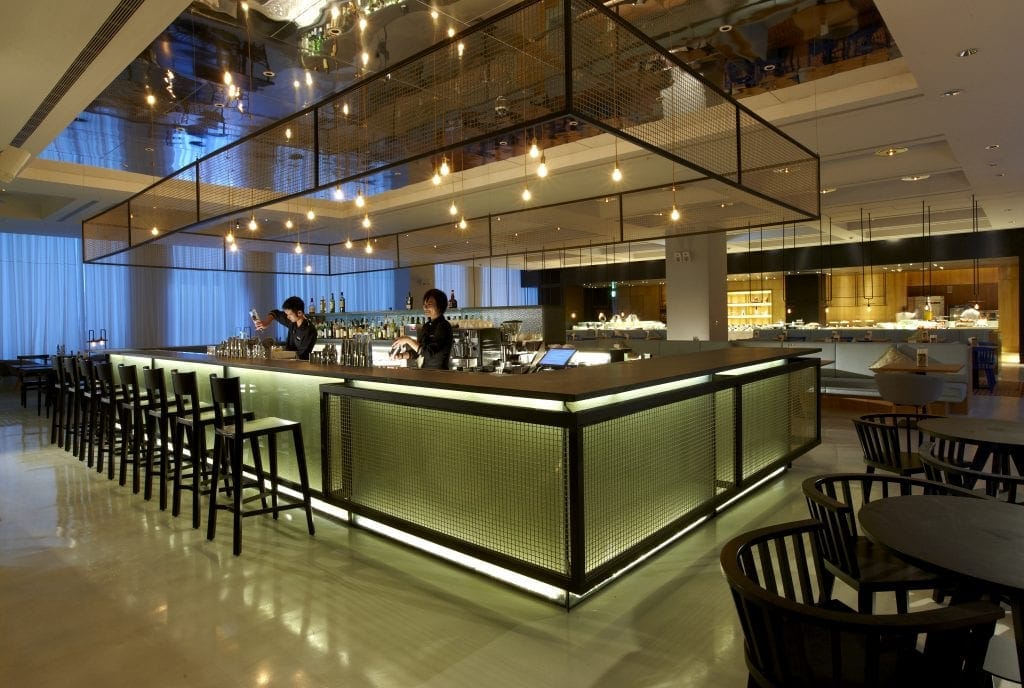


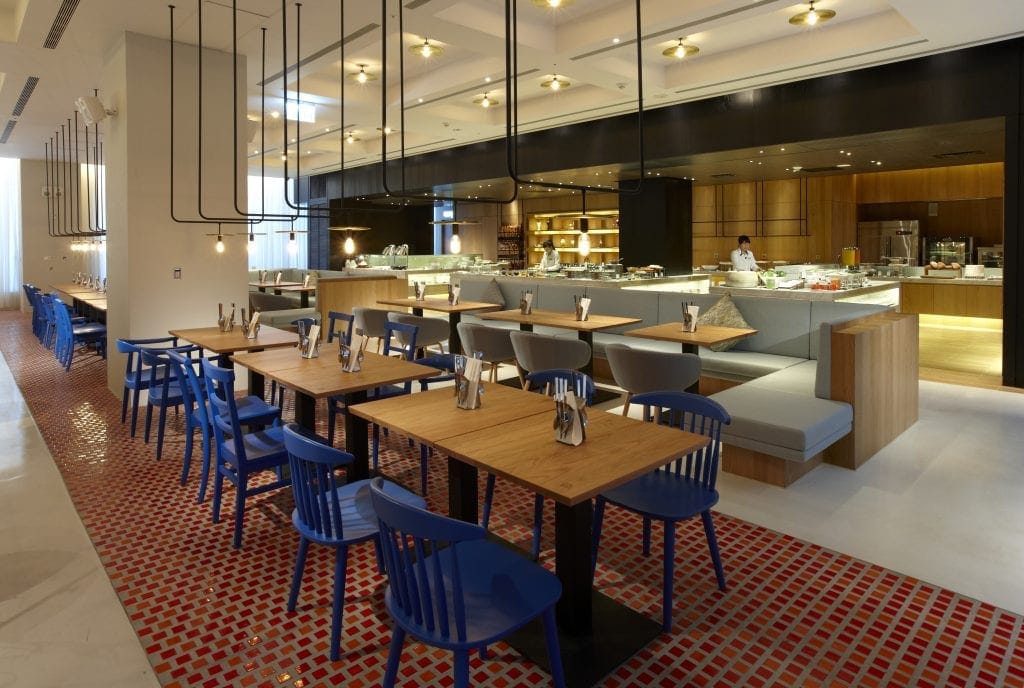
The result is an impressive working of materials , planes and volumes that connect and float with lighting playing an integral part to their harmony.
Client: Royal Management Consultant Co, Ltd
Operator: Hotel Royal Group
Architect and Interior Designer: Mecanoo
Yuan Restaurant is the latest dining destination at the world-renowned Atlantis Palm Jumeirah. The restaurant is contemporary Chinese with a traditional twist, offering modern food with time-honoured traditions. This philosophy is carried throughout the interior spaces to bring an exciting and elegant experience to Yuan’s guests.
dpa had the pleasure of being part of the design team to design the interior lighting to the front of house spaces.
The space is varied with multi-levels of materials, vistas and areas of focus. The lighting needed to be totally discreet and complement the space without being obvious, but at the same time provide the ambience, accent and functional lighting the restaurant required. The restaurant features different layers of surfaces, with a variety of defined materials and colour palettes . A main objective and briefing for dpa was to work with the least possible numbers of luminaires mounted in the ceiling, and to use concealed lighting where possible to add to the ambience without compromising the focus and interest of the space.
A key consideration when designing a project of this nature is the specification of an Architectural Lighting Control System. This enables programming and balancing of all lighting elements, not only according to the time of the day, but to the time of the season.
The lighting control system controls a number of luminaire groups balanced and programmed according to the time of day and night. There are a number of preset scenes for the daytime, lunch time dining, early and late night.
Client: Kerzner
Operator: Atlantis The Palm Limited
Architect: Noor
Interior Designer: Steve Leung Designers
M&E Consultant : Crown House Technology UAE LLC


Masala World Ltd, who own several Indian restaurants such as Chutney Mary, Veeraswamy, and Masala Zone approached dpa to design the interior and exterior lighting to Masala World’s most notable restaurant to date. The name Amaya means without boundaries, which is intended to be reflected in the cuisine whose influences are gathered throughout the length and breadth of India.
The main emphasis of the restaurant is the open show kitchen to the far end. The brief was to make this the jewel of the restaurant, where theatre would take place from the chef’s various tandoor ovens, grills, fresh seafood and vegetable displays, and wonderful backlit oil wall display as a backdrop to the kitchen.
The challenge for dpa was to adopt a broad thinking approach to the design with lighting components coordinated into this rich interior. The interior is complemented by its variety of materials and textures which are further accentuate by what we feel is a vital ingredient, light.
Client: MW Eat
Interior Designer: Design Wilkes
Architect: Crispin Wrig


The Langham Hotel, London is home to the Landau Restaurant along with the Artesian Bar. The dramatic interior design combines modern orientalism with the romance of Victoriana. The interior and exterior entrance spaces are enhanced by a thoughtful and considered design, with lighting complementing and accentuating these features.
dpa’s challenge was to bring out the best in the interior features with lighting and integrate this seamlessly and as anonymously into the fabric of the interior.
Key interior elements are accent lit to provide drama to the spaces while soft washes of light gently bring the interior surfaces to life.
The external entrance is understated yet strong in character with shielded lighting to steps and planters, again, exposing the materials and surfaces, while a backlit traditional canopy formalises the entrance.
The maître d’ area is kept simple to provide focus through to the feature wine displays within the vaulted corridor, which is softly uplit to express the vaults.
The restaurant perimeter is accented with uplighting to windows and sheers to reduce the awareness of the busy street beyond as well as to respond to the feature interior elements. Contrast and theatre is achieved by only lighting interior elements of significant visual interest. Tables are spot lit to further provide both drama and intimacy. Art objects are illuminated to add interest to the perimeter views along with the feature banquette seating lights, which are designed by the interior designer. These are further complemented by feature interior designer selection chandeliers within a lit ceiling coffer. Simple, recessed trimless downlights are used sparingly to light artwork to the perimeter walls.
The service areas have also been given care and attention to the lighting, ensuring that the lighting to this area is controlled separately from the main restaurant lighting, so that this can be balanced appropriately through the day and night scenes to maintain a harmonious lighting level between the respective guest and staff areas.
In addition to the interior lighting, careful consideration was taken to select external lighting to the window reveals to complement the interior views out and to further reduce the awareness of the busy street beyond.
Lighting control was used as an essential tool to provide versatility for the hotel for various settings through the day and night and to allow mood and ambience to be achieved, which is particularly important for evening dining.
Client: Langham Hotels
Operator: Langham Hospitality Group
Project Manager: Fitzsimons
Architect: Formation Architects
Interior Designer: David Collins Studio (Artisian Bar and The Landau Restaurant)
M&E Consultant: Mitie Engineering


The Perfectionists’ Café draws on the vernacular and ambience of the 60’s “heyday” of passenger flights when air travel was deemed glamorous. The interior style, finishes, and lighting echo this. Lighting was a key component to the success of the restaurant at the briefing stage with the lighting design requirements to consider the huge competition within the terminal, the ‘show kitchen & bar’ and the Ice Cream Parlour which were the backdrop to the theatre that was to be The Perfectionists café. Energy requirements were very strict as dictated by Heathrow and the usage throughout the day and night with the extreme daylight and artificial terminal lighting throughout the day and nights were an added challenge.
Working closely with interior designers Afroditi Krassa Studio, dpa’s design integrates and complements the unique and vibrant interior spaces to enhance the rich materials with a mixture of subtle brushes of light coupled with more dramatic accents to further enhance points of interest throughout the restaurant.
Our role was also to review, coordinate and suggest any additional decorative lighting and to provide the wow factor with lighting.
Design Approach & Challenges
The overall impression of the restaurant and, in particular, its elevation is the ‘band of interest and activity’ from the buzzy bar area at the entry point to the other side of the restaurant where the pace is more relaxed. dpa provided design solutions for the floating facia, backlit lettering and accent lighting to the feature mechanical clockwork knife which sparkles like an expensive Swiss timepiece.
The bar and café counter stretches seamlessly lifting the layers of interior materials with light. The displays to the rear are the main focal point with lighting integrated within ceiling details to minimise view of lighting equipment. This provides accent lighting to food displays, interior objects, and materials of interest such as the wood oven, bar, café and Ice cream parlour.
Interactive ‘triggers’ were designed into the scheme with Controlled Lighting Ltd to provide an extra touch of ‘theatre’ and interaction. For example, the bread oven is spot lit at the opening and recedes to the back when in use. Also, the bar cocktail area receives a similar accent when in use as does the nitrogen station for the ice-cream machines with colour changing lighting being activated when the nitrogen vapour pours from the bowls.
Individual table lights and floor lights to seating areas were introduced to the areas where ceilings were not possible to provide intimacy and a human scale to what is still a large terminal building and vibrant artwork provides a backdrop to the banquette seating areas.
All lighting utilises LED’s including the decorative pendants, table and floor lights.
A lighting control system provides the necessary variable lighting scenes to provide appropriate day and intimate and moody night scenes.
Client and Operator: The Fat Duck Group
Architect: Offset Architects
Interior Designer: Afroditi Krassa Studio
M&E Consultant: B.E.S Ltd
Photography: courtesy of Sim Canetty-Clarke


Recently, the Mint Leaf of London restaurant opened its doors in the heart of Dubai International Finance Centre (DIFC), at the 15th floor of the Emirates Financial Towers, South Tower. With a fine selection of authentic Indian cuisine and panoramic views of the city, the restaurant promises a truly exceptional gastronomic experience.
During the entire design process, dpa worked closely with the Interior Designers LW Design. The rich and varied materials of the interior space reflect the high quality aspirations of the Client. The biggest challenge for the lighting was to design a scheme of minimal visibility that complements the interior and dark finishes without obscuring the stunning view of the city, but still providing sufficient lighting for the show kitchens and dining tables.
The intricate petals of the high ceiling have been emphasised with linear LED and within their recessed slots, spotlights have been concealed from direct view to keep the ceiling as clean as possible. Concealed lighting and a high number of discreet uplights have been installed throughout to highlight the beauty in the details. Hanging seating chairs have been accentuated by the use of miniature downlights. The evenly backlit bar counter and large graphic panels provide focal points and scale to the space. Carefully chosen decorative light fixtures give the interior ambience its individual touch.
The complete lighting scheme is dimmable and controlled through an automatic architectural lighting control system to suit different locations and timings.
Client: Mint Leaf of London
Interior Designer: LW Design Group
Photography: LW Design Group


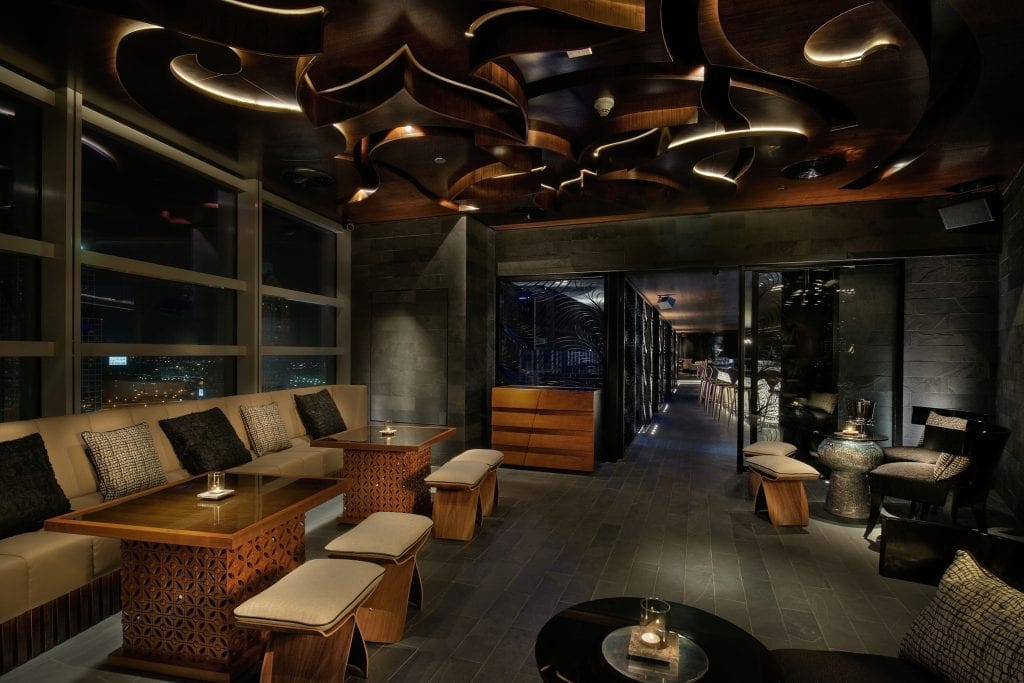


The Connaught in London is one of the city’s ‘elder statesman’ hotels and is a favourite for many for its discreet location and very high quality service. The hotel underwent a complete refurbishment in phases in the early 2000’s and Gary Campbell, London partner at dpa was commissioned to provide lighting design services to the ground floor public areas. One of these areas is the Connaught Bar, previously the famous old ‘American Bar’. David Collins Studio was commissioned to develop a unique luxurious interior design. The interior lighting has a high degree of decorative luminaires, pendants and wall lights, and these are complemented with very discreet downlighting to provide accent. Fibre-optics are integrated into the wine display cases.
Client and Operator: Maybourne Hotel Group
Project Manager: Rainey and Best
Architect: Blair Associates Architects
Interior Designers: David Collins, India Madhavi & Sills Huniford Associates
M&E Consultant: Lehding Services Design


When visiting the Galleria Mall on Al Maryah Island in Abu Dhabi, no one would expect to find a cosy European bistro and bar with French-inspired cuisine between all the glamorous shopping outlets.
The Bentley Bistro & Bar identifies itself with a prominent sign at the entrance and the obscured glass front just leaves you with a suggestion of what awaits behind it. Through the double doors you enter an extended space with a heritage-driven interior scheme, designed by the Interior Designer and name giver Jon Bentley of Harrisons, Realising Creative Environments.
During the design development dpa worked closely together with the operator Food Fund and the interior designer to achieve a unique and remarkable interior. The lighting is visual, dominated by the various custom-selected decorative pendants, wall lights and table lamps. It still was of importance to provide sufficient functional lighting to the tables and bar area, without affecting the moody ambience of the bistro and by minimising the view of lighting equipment. At the slatted ceiling, suspended spotlights, hidden between the beams, provide focal glow to the tables underneath.
Concealed linear lighting complements the carefully selected materials at the low partitions and seating furniture where, at the raised level lounge, linear uplighting enhances the texture of the red brick wall.
Bentley’s opens its doors from the morning to the evening. The beautiful day lit terrace invites the guests to have a cup of coffee in the sunshine, while in the evening they can enjoy a delicious cocktail at the feature bar. Without disrespect to the cultural sensitivity to alcohol, discreet lighting has been integrated to the bottle display at the back bar to provide a focal point within the scheme. The lighting has been concealed within the display to highlight the bottle labels, when the louvers are open and to create a subtle glow, when louvers are closed.
Client, Operator and Project Manager: Food Fund International
Interior Designer: Harrison


The combination of carefully integrated lighting equipment within the interior fabric and the use of decorative human scale lighting elements such as table lamps and floor standing lamps has resulted in a visually stimulating hotel interior. The balance between varying lighting techniques in terms of their detailing and the intensity of light being emitted from them was a pre-requisite in the early stages of the lighting design process.
The resultant effect is one of a harmonious lit environment in which the interior architecture is sympathetically expressed with artificial light.
Client: Abu Dhabi Royal Family
Operator: Le Royal Méridien
Project Manager: Tailored Business Solutions
Architect: LW Design Group
Interior Designer: LW Design Group
M&E Consultant: WME Consultants


The majority of the photography for this project is courtesy of:
Mandarin Oriental / George Apostolidis
The Mandarin Oriental Hotel is located within the Mala Strana historic quarter of bohemian Prague. The project consisted of the refurbishment of a disused Baroque style building, which started life as a monastery before ending life as a print works for the local government.
As lighting consultants we worked closely with the Interior Designer and the National Heritage Authority (NPU) to ensure a design which, while sympathetic to the architecture of the building, responded to the needs of the hotel’s guests and operator.
NPU placed stringent requirements on the locations and appearance of luminaires within the historic areas of the hotel, which resulted in the bespoke design of three different luminaires.
Within the restaurant it was only permitted to mount luminaires on the wall, a luminaire was therefore designed that had three individually controllable light sources, providing a low-level wash of light to the floor, an uplight component revealing the structure of the low vaulted ceiling while also providing ambient light to the space and a decorative element for visual interest.
In the Monastery Lounge and Ballroom, the solution was to create a luminaire of stone appearance, concealing three different light sources all individually controllable. Allowing a general ambient illumination to be achieved while revealing the columns and vault with a concealed up and downlight. Luminaires were also concealed in the reconstructed column cornices providing additional uplight to the vaulted ceiling. Within the Ballroom, a number of chandeliers, constructed from local bohemian crystal, were hung from the central point of each vault.
Scene setting of the lighting is utilised to lower energy usage and to set the mood of each individual space appropriate to the time of day or function. One area where the controls were especially important was the bar whose focal point is a backlit glass bottle display. The colour of the lighting has been carefully chosen to suit the mood and time of day, varying from a bright invigorating sky blue in the morning through to a deep saturated red for late night drinking.
Client: Finartis Financial SA
Operator: Mandarin Oriental Hotel Group
Project Manager: Bovis Lend Lease
Interior Design: Sporer Plus
Concept Interior Design: KCA International
Spa Interior Design: Deckelmann Wellness
Photography: Courtesy of Mandarin Oriental Hotel Group.


Manns Wines treats their special guests to fantastic dishes at their Private Dining Room and Cellar which was designed by Interior Designers – Design Eight.
dpa’s scope of work consisted of the Wine Cellar, the Tasting Room, and the Dining Room. All of these facilities are located underground in the garden next to the winery and close to the vineyards so artificial lighting was an extremely important component to the interior spaces.
In the cellar wine bottles are displayed on shelves with concealed linear LED. Refraction of the light from the wine bottles and their contents creates a beautiful glowing ambience with the wine becoming luminous. Table stand decorative lights form a line along the wall producing a relaxing atmosphere and softening the overall ambience this also leads guests into the tasting room.
Original wine racks have been reused to create a display wall in the tasting room, with light emanating from beneath to create a graphic dot pattern on the wall.
As always the lighting control is an essential part of the proposal with each different lighting element separately circuited and dimmed to allow a variety of lighting scenes to be created.
Photography courtesy of Joshua Lieberman
Interior Designer: Design Eight


Elements Restaurant at The Four Seasons Riyadh offers a variety of cuisines throughout the day and night. Unlike most All Day Eateries this facility provides the highest quality of food in luxurious and visually stimulating surroundings. There are a variety of different show kitchens offering different cuisines all displayed and prepared beautifully.
The lighting has been carefully conceived as part of the overall design philosophy with the show kitchens and displays having a dramatic and theatrical quality with eating areas enjoying intimacy. The lighting consists of a combination of elements, integrated light within counters at low level, integrated light within high-level canopies and cornices, highlighting of displays and tables with narrow beam spotlights, and a variety of decorative luminaires.
All the lighting is connected to a computer controlled pre-set scene-setting system that has been carefully organised to provide the perfect atmosphere at each moment of the day and night.


Crystal Cruises are a very special Cruise organisation providing the highest quality of environment, service, and itinerary to their guests. Both their ships now have a restaurant that provides a sushi bar and food by the famous restaurateur Nobu Matsuhisa.
dpa lighting consultants worked closely with the client representative Alexandra Don and Interior Designer Adfecto to produce a very special environment. The lighting was carefully designed to ensure the theatre of the sushi bar could be enjoyed alongside an intimate dining atmosphere at the table.
A combination of decorative ambient fixtures, narrow beam spotlights to the tables, and the highlighting of various other features around the space, linked to a scene set control system, ensure the atmosphere is just perfect to complement the food.
Client: Crystal Cruises International
ID: AD Associates

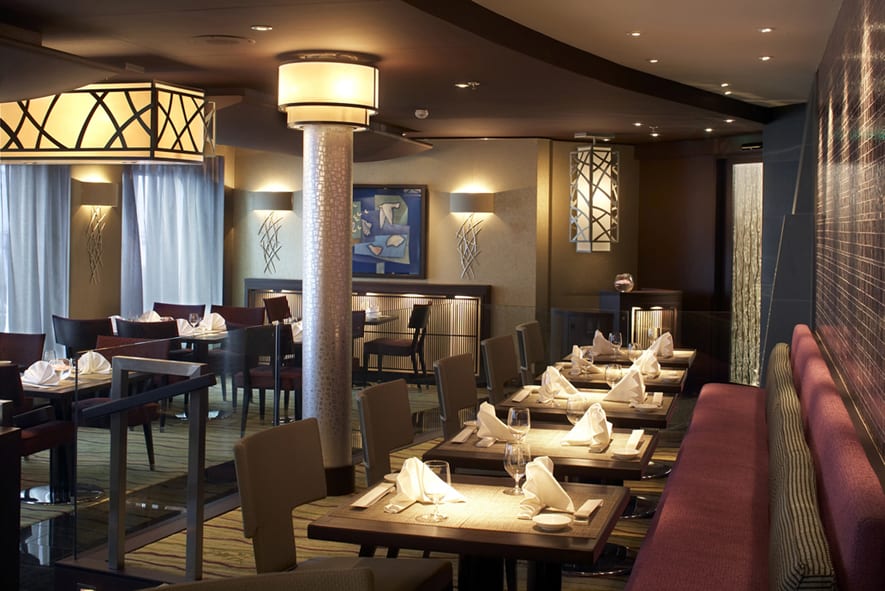


The Luggage Room at the Marriott Grosvenor Square draws on the vernacular and ambience of the 20’s intimate cocktail bar with sumptuous luxury in every detail of the interior and furniture design.
Working closely with interior designers Fabled Studio, dpa’s design challenge was to integrate and complement the elegant interior spaces and enhance the rich materials with a mixture of subtle brushes of light coupled with more dramatic accents to further enhance points of interest.
Key elements include displays that sparkle with depth, quality, contrast and elegance, uplighting to feature window screens, and accent to artwork and curiosities of a bygone era. Concealed lighting to the bar exposes delicate yet robust detailing echoing traditional steam age luggage and fine liquors and wines glow with concealed lighting in the bar, liquor cabinets and wine displays which all add to the overall character of the space.
Bespoke decorative lighting designed by Fabled Studio provide a signature to the lighting ambience while dark reflective surfaces catch glimmers of light.
An architectural lighting control system provides the necessary variable lighting scenes to provide appropriate day and intimate and moody night scenes for the late night in-crowd.


The Four Seasons Hotel is one of Prague’s most exclusive hotels and has the only Michelin-star restaurant in the city. When the hotel felt it was time to refurbish and relaunch the restaurant with a new name and interior, dpa were approached to design the lighting.
The Bar and Restaurant are bright and airy by day, with views of Prague Castle and the Charles Bridge. In the evening, the lighting helps create an intimate dining experience within the restaurant. The Bar uses lighting to highlight decorative materials and interior details. Carefully selected artwork lighting, well-integrated lighting within furniture details, and candles on tables combine to create a vibrant and sophisticated night time destination.


This is a recent refurbishment of an existing restaurant located on the 29th Floor of Beijing’s Kunlun Hotel.
The Summit Club is the only revolving restaurant and lounge in the Central Business District, where guests can enjoy a 360-degree panoramic view of the surrounding area as they dine. The interior of the restaurant is characterised by large-scale silk pendant shades internally lit with warm white and UV blue lamps. The lampshades slowly cross-fade between the alternate colours as part of a pre-set lighting sequence. The restaurant has teppanyaki style show kitchens around the central core with back-lit decorative glass screens and backlit glass cladding to the cooker hoods above the teppans.
One of the challenges of the project was providing power to the accent lighting integrated into the freestanding screens located on the revolving floor. Our solution was to utilise large rechargeable batteries to power the LED light sources, which are periodically recharged by the hotel staff.


The Intercontinental Hotel in Park Lane has undergone an extensive refurbishment to the public areas and rooms. As part of the refurbishment is the destination restaurant “Theo Randall at The InterContinental”. The entrance is a glowing corridor welcoming guests through to its intimate interior. Lighting is used here to provide backlighting to various materials and accent tables, objects, and art. The key to the lighting success here is the ability to control each lighting component and provide focal points within the interior. Lighting has been used to backlight the bar top and back bar display. The feature columns with grass motif are backlit to provide an ambience to the central area of seating while the tables are spotlit and as with all of the other lighting are dimmable to provide appropriate ambience through the day and night.
Client: Intercontinental Hotels
Interior Designer: J2 Design
Project Manager: Fitzsimons


The Grosvenor House in Dubai is already well established as an excellent hotel together with its iconic Buddha Bar. Grosvenor House Tower Two was completed in 2011. dpa lighting consultants worked closely with LW Design on the Embassy Club, Siddharta Lounge by Buddha Bar and Toro Toro. The hotel states it is “Poised to turn up the heat considerably in the city’s already famed dining scene, it pioneers tastes from Buenos Aires to São Paulo and offers a multitude of Pan Latin dining experiences paired with an infinite Cachaça Bar”.
The multi-layered lighting provides an appropriately evocative atmosphere for such an important restaurant. The circular coffers in a burnt orange are illuminated with concealed light, the backlit stone walls create a striking feature, pendants over key tables offer intimacy, features are high-lit with adjustable spotlights, etc. Every element on the interior has had the lighting carefully considered to reveal surprises throughout the restaurant complex, which is spread out over two levels. As ever, decorative lights and candles are as important as any other lighting device to create the ambience.
As with almost all dpa projects, the control of the lighting is activated by a scene-set system that has pre-determined lighting scenarios.


In 2005, the Fortnum and Mason department store in London underwent a complete refurbishment. The famous food court is located on the lower ground floor, and central to this area was installed a high-end wine bar designed by David Collins Studio. Gary Campbell, London partner at dpa, was commissioned to design the lighting for all areas of the refurbishment including the wine bar. In keeping with DCS usual projects, the interior design was very high-quality while, in this concept, retaining an impression of a traditional bodega or wine cellar. Indirect concealed lighting illuminated the vaulted ceiling with custom hand-blown glass pendants providing ambient illumination. The focal point of the wine bar was a large wine display case with all the necessary environmental controls for expensive wines. To this end, fibre-optic lighting was discreetly detailed into the cabinetry to illuminate each bottle. A scene set dimming system controlled all lighting and a warm ambient appearance was provided at all times.


The interior of this restaurant is designed in a traditional Japanese style. The main table is constructed of real Japanese maple, highlighted with narrow beam tungsten halogen spotlights.
Each private room is separated by a mosquito net; a suitable material to let light pass through and keep the light from glaring people at the dining table.
‘Hanare’ is the Japanese tea room, where light comes from the lower part of a paper sliding door, which creates a calming atmosphere.


The acclaimed Embassy Dubai is the latest edition of the legendary London Venue that has rapidly become one of the most chic hotspots in town. Situated on three floors at the top of the new Grosvenor House Hotel Tower 2, the venue dubbed as a supper and members club has spectacular 360º views of the Dubai Marina and Arabian Gulf and is a regular haunt of celebrities and the Dubai elite.
In collaboration with renowned interior designers, LW Design Group, dpa helped to create a lighting design befitting of the club’s clientele and pedigree. From the glitter and sparkle of artwork display cases to the intimate and stylish private rooms, the rich variety of materials and finishes are accentuated with light to reinforce the luxurious and fashionable interiors. Upon arriving to the club in the exclusive elevator, the journey of light and texture is followed through to every space and detail, with deliberate varying atmospheres and ambience for the dining, dancing, social, and private areas. The lighting techniques used are designed not to overpower the interiors in their own right, but to provide contrast and excitement in an environment where you want to be and be seen.


Mosaic is a recently refurbished All Day Dining Restaurant in Lebanon’s foremost hotel, the 5* Phoenicia InterContinental, Beirut.
The restaurant offers an ever-changing variety of International and Oriental buffets, daily live cooking stations and generous displays of the very best regional cuisine.
Interior Designers LWD have created a contemporary and elegant dining destination with an oriental and arabesque inspired ambience.
dpa worked closely with the designers to create a lighting design that is sympathetic to the interiors and that emphasises the intricate features and rich textures. Special attention was made to the play of light and shadow through decorative screens and chandeliers. Also special emphasis was required for highlighting the collection of artwork including the 5senses feature wall display.
The restaurant’s mood and atmosphere can be altered from vibrant through to romantic via pre-set lighting scenes to suit the time of day and occasion.


dpa lighting consultants provided illumination advice for the interior lighting of the themed Buddha Bar / Restaurant.
Carefully concealed light sources graze across rich fabrics exposing their texture and form and enhancing each area. The Buddha Bar has a major central space with incredible chandeliers floating in the volume that are appreciated from two levels. The surrounding areas provide a variety of intimate spaces where people can relax. One of the great joys is the multitude of locations where you can choose to linger and enjoy the resulting variety of views. The lighting chooses carefully the elements that the eye sees from each position.
The Bar itself is vibrant but understated with illumination gently enhancing the theatre behind. All the lighting is controlled on a pre-set system to provide exactly the right ambience in each and every location.
Using light of the correct intensity, direction and distribution ensures that the spatial hierarchy created by the Interior Designers is maintained and reinforced during the hours of darkness. Warm, low voltage tungsten halogen light sources provide excellent rendering of the rich textures and colours of the suspended fabrics within the restaurant.
Narrow beam downlights located between suspended fabric panels serve two purposes – illumination to the fabric themselves together with focused lighting to seating areas and tables. Wall lights and artwork lighting maintain visual interest to the periphery by providing a degree of contrast.
Within the Dining Area, close offset lighting reveals the texture of the stone wall behind the bar area. Uniformity has been deliberately avoided so that the eye is gently drawn to individual points or areas of interest.
The lighting of the dining areas was designed so as to ensure that the correct balance was achieved between the illumination of tables (and the food to be consumed) and the other surfaces forming the boundaries of the space. In the Buddha Bar/Restaurant, the richly coloured materials and objects respond to light whilst the dark wall surfaces provide a counterbalance. In situations like these, less light often means “more”.


The Okura Hotel, Amsterdam has recently undergone renovation of the main Serre Restaurant and Bar and Function Suites including Grand Ballroom.
dpa worked with interior designers RPW from London to create a stunning and appropriate destination restaurant and terrace beside a buzzing canal in the heart of Amsterdam. The lobby bar complements the new restaurant with dark tones and appropriate lighting to provide a dramatic interior using layers of lighting from concealed linear lighting, to low level bar and seating and pin spots to tables and decorative screens. The restaurant was a particular challenge with a crystal clear conservatory providing views onto the restaurant terrace which, comes to life at night with concealed dramatic lighting from linear planter up lighting, tree up lighting and delicate and magical copper lanterns in the feature trees.
The Function Suites and Ballroom have had a contemporary facelift to freshen and energise the spaces. Artwork and contrasting materials are accented, along with a review of the energy issues by utilising low energy light sources. The ballroom has received a huge transformation with colour change LED coffer lighting and a magnificent feature lighting artwork of tree crowns symbolising the trees to the landscape. The lighting is concealed behind the ‘tree crowns’ suggesting the glow from a moonlit night through trees and is complemented with dappled light to the face of the trees from gobo projectors carefully recessed into the ceiling.